
The Antarctic Treaty | Protecting the Last True Wilderness on Earth

When you travel with Secret Atlas to Antarctica, you’re stepping into a region governed by one of the most remarkable international agreements that was ever created.
The Antarctic Treaty defines how this continent is used, preserved, and shared by humanity. It ensures that what you experience on your Antarctic micro-cruise remains as pure and untouched as possible.
This frozen world has no government, no cities, and no borders. Yet, it operates with an impressive level of order and cooperation between nations. To understand why travel here is so unique and why parts of Antarctica remain off-limits, it helps to know the story behind the treaty that protects them.

How the Antarctic Treaty began
The Antarctic Treaty was signed on December 1, 1959, and came into force in 1961. It was initially agreed upon by twelve nations - Argentina, Australia, Belgium, Chile, France, Japan, New Zealand, Norway, South Africa, the Soviet Union, the United Kingdom, and the United States.
These countries were already active in Antarctic research during the International Geophysical Year of 1957–58, and they shared one clear goal: to prevent conflict and preserve the continent for peaceful scientific study.

The treaty is simple but powerful. It bans military activity, nuclear testing, and any claim enforcement over land. It also declares that Antarctica shall be used 'exclusively for peaceful purposes,' promoting collaboration in research and the free exchange of scientific results.
When you hear someone ask “why is Antarctica off-limits”, the answer lies here. It isn’t truly forbidden, but it’s protected. The Antarctic Treaty ensures that the only human footprint allowed is one that leaves no lasting mark.

What the Antarctic Treaty protects
The treaty covers everything south of latitude 60°S, including the land, ice shelves, and the surrounding Southern Ocean. It suspends national sovereignty claims, creating a neutral continent that belongs to no one and everyone at once.
It also established a framework now known as the Antarctic Treaty System, which oversees:
Environmental protection: Strict limits on waste, emissions, and wildlife disturbance.
Scientific cooperation: Shared data and international research efforts.
On-site inspections: Any country can verify that others are following the rules.
Peaceful coexistence: No weapons, fortifications, or military training.
In 1991, a major addition called the Protocol on Environmental Protection went even further. It banned all mineral resource activity, prohibited permanent development, and formally designated Antarctica as a 'natural reserve devoted to peace and science.'
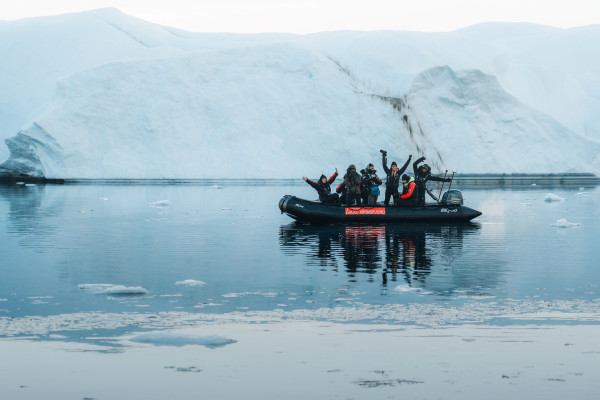
For travellers, these protections are the reason the experience feels so different from anywhere else on Earth. Each landing, each zodiac ride, and each wildlife encounter happens under the strictest environmental code. You’re witnessing a living laboratory where everything, such as penguins, seals, ice formations, and human presence must coexist carefully.

Why can’t we explore it freely?
Many people wonder “why can’t we explore Antarctica” or even mention strange theories like the “Antarctica wall,” the “Antarctica conspiracy,” or an “Antarctica no-fly zone.” The truth is far more grounded. You can explore, but only within carefully managed limits.
Flights to Antarctica are heavily restricted because there are no permanent airports - just short gravel or ice runways maintained by research stations and expedition operators. All activities require permits under the treaty, and operators must comply with environmental protocols and weather-safety standards.
So while Antarctica may appear 'guarded,' it’s not by soldiers, but it’s by scientists, environmental stewards, and international regulations that protect its fragile ecosystem. Some refer to this as part of a larger Antarctica theory, suggesting the continent hides secrets beneath its ice. In reality, the only mystery here is how nature still thrives in such extremes.
The exploration and discovery of the Antarctic Circle
The name 'Antarctica' comes from the Greek 'anti-arktikos,'meaning 'opposite to the Arctic.' For centuries, geographers imagined a great southern continent balancing the Earth’s landmass.
In 1773, Captain James Cook became the first person to cross the Antarctic Circle, though he never sighted the continent itself. He concluded that if a southern land existed, it must be covered in ice and nearly inaccessible.
That theory proved true when, in 1820, the Russian expedition of Fabian von Bellingshausen and Mikhail Lazarev became the first to officially sight the Antarctic mainland.
Over the following decades, explorers such as James Clark Ross, Ernest Shackleton, and Roald Amundsen ventured deeper into the frozen interior, facing unimaginable conditions in what became known as the Heroic Age of Antarctic Exploration.
Those early expeditions laid the groundwork for the research stations that now operate under the Antarctic Treaty. Each station represents a small piece of international cooperation - proof that exploration here is still possible, just far more responsible.


Wildlife and wilderness under protection
Because of the treaty’s environmental rules, Antarctica’s wildlife thrives in an environment largely free from human interference. Travellers on a Secret Atlas expedition often witness:
Penguin colonies - Adélie, chinstrap, and gentoo penguins nesting in vast numbers.
Seals - including Weddell, leopard, and crabeater seals resting along the ice edge.
Whales - humpback, minke, and even blue whales feeding in rich Antarctic waters.
Seabirds - such as the wandering albatross, with wingspans over three meters.
Every encounter follows strict IAATO (International Association of Antarctica Tour Operators) guidelines. You’ll maintain respectful distances, disinfect gear, and avoid leaving anything behind. It’s a system designed so you can experience the wildest place on Earth without disturbing it.
The Antarctic Treaty is the most successful international conservation agreement in history.
Understanding what it protects — and how it shapes what expedition operators can and can't do — makes every landing more meaningful.
Fly and cruise with Secret Atlas

Under the treaty, visitors can access designated landing sites, but the season, weather, and logistics make it a rare privilege. Travel is only possible during the austral summer (November–March) when sea ice retreats, daylight stretches for nearly 24 hours, and wildlife is at its most active.
A Secret Atlas Fly & Cruise lets you experience this in the most efficient and rewarding way possible. By skipping the Drake Passage, you fly directly from Puerto Natales in Chilean Patagonia to King George Island - your gateway to the Antarctic Peninsula. From there, you board one of Secret Atlas’s small 36-guest expedition vessels, designed for intimacy and sustainability.
Because you’re flying instead of spending four days crossing open ocean, you gain up to four extra days exploring Antarctica itself. Since everyone lands together, there is no waiting and no rotations, so you experience the continent as it should be: quietly, closely, and personally.
During your stay, you’ll navigate iceberg-lined bays, walk among penguin rookeries, and learn from expert naturalists about the same regions protected by the Antarctic Treaty. Every activity follows IAATO and treaty standards - proof that modern exploration can coexist with preservation.
The modern significance of the Antarctic Treaty
Today, more than fifty countries have joined the treaty system. While other parts of the world face disputes over borders and resources, Antarctica stands as a model for peaceful international cooperation.
There’s no Antarctica government or ownership, as it’s managed collectively. That’s what makes visiting here so extraordinary. You’re setting foot on the only continent where humanity agreed to put science and conservation above politics.
It’s often compared to the Arctic Treaty, though that term isn’t official, as the Arctic is governed differently, through national and regional agreements. Still, both regions share the same spirit of protecting fragile polar environments through international cooperation.

In a world where so much is changing, the Antarctic Treaty continues to show that global unity is possible. It keeps mining and militarisation out, encourages climate research, and preserves the sense of wonder that travellers feel the moment they see the White Continent for the first time.
Why it matters when you travel with Secret Atlas
Every Secret Atlas expedition operates under the same principles that shaped the treaty: peace, science, and respect for nature. Your micro-cruise is deliberately small with just 44 guests so every person can land together, minimising disturbance. Your guides are trained in treaty protocols, and your ship is built for minimal environmental impact.
Choosing a fly & cruise experience aligns perfectly with the treaty’s goals. You spend less time at sea, use fewer resources, and maximise your opportunity to appreciate Antarctica without overwhelming it. It’s exploration the way it was always meant to be - responsible, personal, and unforgettable.

Preserving the last true wilderness
The Antarctic Treaty stands as one of humanity’s most remarkable achievements: a shared promise to protect a place beyond national interest. It answers the questions people often ask—why is Antarctica guarded, why can’t we explore Antarctica freely, and what makes it special—with one clear truth: it’s guarded because it’s sacred in its purity.
When you fly and cruise to Antarctica with Secret Atlas, you’re taking part in that legacy. You’re experiencing the freedom of exploration within a framework built on cooperation and care. And when you step onto the ice for the first time, surrounded by penguins and endless white horizons, you’ll understand exactly why the world chose to protect it.

South Georgia and Antarctica Shackleton Special Expedition Micro Cruise
54°16’S, 36°30’W
19 days. South Georgia, Elephant Island, and Antarctica in a single voyage. The three places that define the Endurance expedition, followed in sequence. 36 guests aboard Aureum. Spring breathes new life as South Georgia’s vast king penguin colonies teem with activity. Fur seal pups begin to appear, while wandering albatross soar effortlessly overhead.
- 36 guests
- 19 days

Antarctic Peninsula Expedition Micro Cruise by Air & Sea
54°16’S, 36°30’W
Sail the Drake Passage south from Ushuaia, then fly out of Antarctica direct to Patagonia. Four full days on the Peninsula, 36 guests, six senior polar guides, and a farewell night beneath Torres del Paine. The crossing is the point. The flight is the exit.
- 36 guests
- 9 days

Antarctic Circle Expedition Micro Cruise by Air
54°16’S, 36°30’W
Charter flight from Patagonia. Seven full days in Antarctica. A push for the Antarctic Circle at 66°33'S on every departure. Explore pristine ice, wildlife-rich bays, and iconic sites without crowds, and free from rigid schedules with only 36 guests, the first ship of this size in Antarctica.
- 36 guests
- 11 days

Antarctic Circle Christmas Expedition Micro Cruise by Air
54°16’S, 36°30’W
Christmas Day on the Antarctic Peninsula, in perpetual summer light. A charter flight from Puerto Natales, seven full days on the ice, and a push for the Antarctic Circle at 66°33'S.
- 36 guests
- 11 days

Antarctic Circle New Year Expedition Micro Cruise by Air
54°16’S, 36°30’W
Welcome the New Year in Antarctica on a 36-guest Fly & Cruise expedition. New Year's Eve on the Antarctic Peninsula, in light that does not fade. Charter flight from Puerto Natales, seven full days on the ice, a push for the Antarctic Circle at 66°33'S.
- 36 guests
- 11 days

Falklands, South Georgia and Antarctica Micro Cruise
Combine Falklands, South Georgia and Antarctica on a 78-guest cruise expedition in Spring. Follow in Shackleton’s footsteps, witness penguin chicks and whales, and enjoy uncrowded, pristine landscapes.
- 78 guests
- 21 days
The treaty that protects Antarctica. Understanding it makes every expedition more meaningful.
Our expeditions operate entirely within the Antarctic Treaty framework. Book a free call and we'll tell you what that means for how we travel and what we can access.
The Expedition Micro Cruise concept



Phone
USA
USA+CAN Toll Free
AUS Toll Free
