
Prion Island, South Georgia | A Sanctuary for the Wandering Albatross

Prion Island is a small but ecologically vital island in the Bay of Isles, off the coast of South Georgia Island. It’s one of the only places in the world where visitors can observe the wandering albatross, a seabird with the largest wingspan on Earth, stretching over three meters. Access is limited and carefully managed to protect the island’s fragile wildlife, with rules in place to minimise human impact.
For wildlife enthusiasts, photographers, and conservation-minded travellers, Prion Island offers a rare glimpse of a sub-Antarctic ecosystem that remains much as it once was—where native birds like the South Georgia pipit and prions still thrive in an environment shaped more by nature than by people.

Where the name comes from
Prion Island gets its name from a small seabird—the prion. These birds are fast flyers and graceful in the air, with a slightly hooked bill that helps them pick up tiny crustaceans from the ocean. They nest by the thousands here, tucked into the tussock grass, returning every year.
The name isn’t just symbolic—it’s a signal that this island is one of the last strongholds for seabirds in South Georgia. The prions are part of a larger ecosystem that once thrived across South Georgia.
Invasive rats decimated bird populations across much of the region in the late 18th to early 19th century, Prion Island remained rat-free, allowing its seabird colonies to survive and thrive.
Discovery of Prion Island in the early 20th century
In 1912, American naturalist Robert Cushman Murphy came to South Georgia aboard the Daisy, which was a small sealing vessel. He spent time in the Bay of Isles and set foot on what would eventually be called Prion Island. He saw an island full of life, especially seabirds, living largely undisturbed.
Murphy’s observations ended up in journals and scientific papers, helping to bring attention to the island’s ecological value.
Early exploration and conservation history
For a long time, Prion Island remained relatively undisturbed compared to other parts of South Georgia. That made it important, not just for scientists, but for conservation groups looking for clues about how to restore what had been lost elsewhere.
One of the biggest threats to native birds across South Georgia was introduced rats. They destroyed eggs, ate chicks, and pushed some species to the brink. Prion Island, luckily, never had a rat problem.
That made it a control site during South Georgia’s massive rodent eradication program. Today, it’s one of the clearest examples of what a healthy seabird island can look like when left to recover.
What to know about the Wandering Albatross
The most iconic residents of Prion Island are the wandering albatrosses, whose wingspans can exceed three meters, making them the largest flying birds in the world. But it’s their behaviour—slow, ritualised, and surprisingly tender—that leaves a lasting impression.
They come to mate, to nest, and to raise a single chick. Wandering albatross pairs who mate return to the same spot every couple of years, performing slow, ritualised dances that are surprisingly cool to watch. Their nests are simple mounds of grass, often within easy view from the island’s boardwalk.
Seeing one for the first time isn’t something you forget. They’re not just big—they’re calm, focused, and strangely elegant, even when grounded.


Visiting Prion Island
Getting to Prion Island requires timing, permits, and a bit of luck. Most visitors arrive by small expedition ship as part of a South Georgia cruise. Landings are weather-dependent and permitted only outside the seasonal closure from 20 November to 7 January, which protects breeding fur seals.
Access is strictly regulated to minimise disturbance. Only two landings per day are allowed, with a maximum of 50 people ashore at any one time. All visitors must pass biosecurity checks, land at the designated beach, and remain on the boardwalk and viewing platforms throughout the visit. No off-trail movement or approach to wildlife is permitted.
While it’s not a long hike, the boardwalk winds through dense tussock grass, past nesting birds, and leads to raised platforms with expansive views. If conditions allow, it’s one of the most memorable landings in South Georgia—quiet, intimate, and full of life.
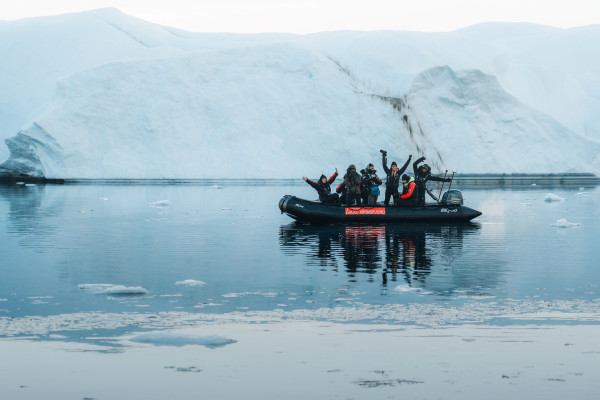
Please note: Prion Island is closed to visitors as the boardwalk remains in disrepair. We are monitoring the situation and will update this page as soon as access changes. Weather permitting, we may still offer a zodiac cruise around the island to observe its wildlife from the water and if repairs are completed, a landing may also be possible.
Prion Island is one of the only places on earth to see nesting Wandering Albatross.
Access is limited to protect the colony. Talk to a specialist about which expeditions are permitted to land.
Other Wildlife of Prion Island

South Georgia Pipit
The South Georgia pipit—one of the world’s rarest songbirds—continues to thrive on Prion Island. It was nearly wiped out across the archipelago by invasive rats, but here, in the absence of predators, it remains a familiar sight. You’ll likely hear its sharp calls echoing through the tussock grass as it flits between nesting sites.
Prions
Often seen darting over the sea or swooping in with the wind, prions are among the most abundant seabirds on the island. They nest in deep burrows beneath the tussock grass, forming dense colonies that are vital to the island’s nutrient cycle. Though small, their presence is a key indicator of a healthy, predator-free ecosystem.


Antarctic Fur Seals
Down by the shore, Antarctic fur seals are often sprawled across the rocks. They're loud, territorial, and not shy about defending their space. During the breeding season, the beach is off-limits, but outside of it, visitors may still observe them from a safe distance on the boardwalk.
Skuas and Giant Petrels
You may also spot skuas patrolling the skies, or giant petrels gliding low over the water. Opportunistic and bold, they’re often seen circling above colonies, searching for vulnerable chicks or carrion near the coast.

Burrowing Petrels
Tucked into the slopes and soft earth, burrowing petrels quietly nest in the protection of tussock-covered ridges. Though less visible than other species, they’re an important part of the island’s delicate ecosystem and a reminder of how little-disturbed this habitat remains.

Experience Prion Island the right way
Prion Island is a protected site, so visitors have to follow strict rules. You’ll need a landing permit, and only a certain number of people are allowed ashore at one time. Plus, you’ll need to stay on the designated boardwalk, and you won’t be allowed to approach nesting birds or wander off the trail.
These rules aren’t only because of protocol. They exist because they are what keep this place from becoming overrun or damaged. Following them means others can have the same experience you’re having: seeing rare wildlife up close, without disturbing it.
Tips for taking pictures on the island
Photographers are drawn to Prion Island for obvious reasons. The light here can be dramatic, low, and golden in the early morning, soft and even when the clouds roll in. Albatrosses are stunning to photograph, and their slow movements are easy to capture with a long lens.
The best way to go about this is to stay still and let the moment come to you. You don’t need to chase the shot. Often, it’s the smaller gestures that stand out, like the way a parent leans over a chick, or the way tussock grass sways in the wind behind a resting pipit. The more patient you are, the more the island reveals.
A model for what’s possible
Prion Island has served as a benchmark for conservation recovery, providing a clear, living example of what an intact seabird ecosystem can look like. During South Georgia’s ambitious rodent eradication (2011–2015), Prion Island was used as a control site, helping scientists measure recovery on treated islands and guiding restoration efforts elsewhere.
Today, the island remains under annual monitoring, with seabird population data informing ongoing conservation across the sub-Antarctic. Though small in size, Prion Island has had an outsized impact, proving that nature can bounce back when given the space to do so.

South Georgia In Depth Expedition Micro Cruise
54°16’S, 36°30’W
15 days devoted entirely to South Georgia. Seven days ashore, early season, before the crowds arrive. Stand among king penguins in their thousands, elephant seals battling, and wandering albatrosses souring above. This is when the island at its most raw. 36 guests aboard Aureum.
- 36 guests
- 15 days

White Kings: South Georgia Special Photo Expedition with Paul Goldstein
54°16’S, 36°30’W
An excitingly ambitious early September foray to South Georgia, with Paul Goldstein. Thirty-six guests. Six senior polar guides maximising every hour of this early season wilderness bonanza.
- 36 guests
- 15 days

South Georgia and Antarctica Shackleton Special Expedition Micro Cruise
54°16’S, 36°30’W
19 days. South Georgia, Elephant Island, and Antarctica in a single voyage. The three places that define the Endurance expedition, followed in sequence. 36 guests aboard Aureum. Spring breathes new life as South Georgia’s vast king penguin colonies teem with activity. Fur seal pups begin to appear, while wandering albatross soar effortlessly overhead.
- 36 guests
- 19 days

Falklands, South Georgia and Antarctica Micro Cruise
Combine Falklands, South Georgia and Antarctica on a 78-guest cruise expedition in Spring. Follow in Shackleton’s footsteps, witness penguin chicks and whales, and enjoy uncrowded, pristine landscapes.
- 78 guests
- 21 days
The Wandering Albatross nests here — and almost nowhere else.
Prion Island access is managed carefully. Book a free call and we'll tell you which of our expeditions includes it, and what the landing involves.
The Expedition Micro Cruise concept


Other relevant articles


Phone
USA
USA+CAN Toll Free
AUS Toll Free
We use cookies to provide a better online experience. Please let us know if you agree to them. You can read our Privacy Policy for more information.

Join the Secret Atlas newsletter
Join the Secret Atlas newsletter
Thank you for signing up!
Welcome to Expedition Micro Cruising. Discover the difference.
We will be exclusively sharing with you our best-kept secrets. You'll receive first-hand expert advice and inspiring stories from our team of explorers, plus our latest news and offers.

Plan Your Journey
Speak to an Expedition Specialist
Every expedition starts with a conversation. Let's discuss your polar adventure dreams and find the perfect journey for you.
Book a Video Call
Speak face-to-face with an expedition specialist. Ask questions, explore ideas, and start shaping a journey built around you.
Book a Phone Call
Talk with an expedition specialist. Get clear, honest guidance to help you plan your next Expedition Micro Cruise.
Download your brochure
Just enter a few details to receive your brochure.