
#46
Researcher Spotlight: Giancarlo Gallinoro — Bringing Arctic Exploration and Science Together

Following the Arctic's Hidden Trails
Some people are drawn north by the promise of adventure. Others are drawn by the pursuit of knowledge.
Giancarlo Gallinoro began with the first and found himself inevitably embracing the second. He discovered something that generations of polar travellers have learned before him: each journey north reveals more of the Arctic's complexity and raises new questions waiting to be answered. In the polar regions, exploration and science have always been intertwined, and the two have become closely linked in Giancarlo's own journey.
A Childhood Shaped by Wild Places
Long before he was guiding expeditions through the ice-choked fjords of Svalbard and Greenland, Giancarlo was a boy roaming the mountains of Italy. Raised by parents who believed childhood belonged outdoors, he spent weekends skiing, hiking, camping, and exploring nature from an early age. Those years taught him confidence, patience, and perhaps most importantly, curiosity, the same qualities that still define him today.
His parents encouraged independence. In the 1990s, children were often given the freedom to wander and learn from experience, and the mountains became his playground. Looking back, Giancarlo sees those early adventures as the foundation for everything that followed.

Answering the Call of the Arctic
Like many who eventually find their way north, Giancarlo felt the pull of the Arctic long before he ever saw it.
"I've always felt this call from the North since I was a kid," he says.
At first it was Greenland that captured his imagination. Later came Svalbard. What began as a holiday visit exploring his passion for photography soon became something far more profound. Among the glaciers, sea ice, and silent mountains of the High Arctic, he discovered a landscape that felt strangely familiar, as though he had finally arrived somewhere he had been searching for all along.
"I went there on holiday years ago, and I just fell in love with it. I wanted a way to stay in Svalbard, and guiding was the best way I could find."
For many travellers, an Arctic expedition cruise is a once-in-a-lifetime experience. For Giancarlo, it became a way of life.

Finding a Home in Svalbard
The road north was not entirely straightforward. Like many people who feel most at home in wild places, Giancarlo briefly attempted a more conventional life.
"I tried getting a more conventional job. That didn't work for me."
Instead, he followed the instinct that had quietly guided him for years.
Determined to make a life in the North, he trained as an Arctic guide and began working around Longyearbyen in the interior before eventually moving into expedition cruising. After an early experience aboard larger vessels left him convinced there had to be a better way to introduce people to the polar world, he discovered Secret Atlas and its small-ship philosophy.
Persistence Pays Off
In characteristic fashion, he did not simply submit an application and wait.
" I checked in frequently with Michele D’Agostino, CEO of Secret Atlas. It took a year, but finally he said: ‘Alright, I'll give you a shot.' "
Today, that persistence has paid off.
That opportunity came aboard Freya in 2022. It proved to be a turning point. The close guest interaction, expedition micro cruise model, and spirit of genuine exploration were exactly what he had been searching for.
A Guide Guests Ask For By Name
Giancarlo has become one of Secret Atlas' most sought-after Expedition Leaders. Guests who have travelled with him frequently ask for him by name when booking future voyages. Many return specifically hoping to share another expedition with him, whether in Svalbard, East Greenland, or elsewhere in the polar world. Once people travel with Giancarlo, they often want to repeat the experience.
This level of guest loyalty is not something that can be manufactured. It is earned through professionalism, authenticity, and a genuine passion for sharing the Arctic.
More Than an Expedition Leader
It is not difficult to understand why.
Giancarlo occupies a rare intersection of talents. He is an expedition leader, professional photographer, educator, natural storyteller, and now an active field researcher conducting scientific investigations in the Arctic. Equally at home discussing wildlife behaviour, glaciology, photography, and conservation, he has an exceptional ability to make complex subjects both accessible and engaging.
Those who travel with him often remark on another skill that cannot be taught in a classroom: his instinctive understanding of the expedition experience itself. He knows when to explain, when to listen, and when to simply let the Arctic speak for itself.
Behind the Helm of a Zodiac
On the water, he is also an expert Zodiac driver. Whether threading safely through a maze of icebergs, positioning guests for the perfect wildlife encounter, or quietly approaching a glacier face glowing blue beneath the midnight sun, he handles a Zodiac with confidence, judgement, and remarkable skill.
Guests quickly learn that when Giancarlo is at the helm, they are in capable hands.
Those who have travelled with him often remark on the same qualities. He never rushes a wildlife encounter. He lingers when conditions allow. He gives guests time to absorb what they are witnessing, whether it is a glacier calving into a fjord, a pod of whales surfacing beside the ship, or a polar bear moving silently across the ice.
It is a style of guiding rooted in patience, humility, and genuine enthusiasm for the natural world.


Returning to Science
That same curiosity eventually led him back into formal study. While continuing to work aboard expedition vessels, Giancarlo completed a master's degree in wildlife biology and conservation, reconnecting with a scientific passion he had carried for years.
"I wanted to get back into what I'm passionate about."
The decision would eventually lead him to launch one of the most exciting Arctic research projects currently taking place aboard Secret Atlas expeditions.

Exploration and Discovery Have Always Travelled Together
Since the earliest days of polar exploration, science has accompanied adventure.
The great expeditions of the Arctic and Antarctic did not venture into the unknown simply to place flags on maps. They carried botanists, geologists, oceanographers, meteorologists, and naturalists. Discovery was measured not only in miles travelled, but in knowledge gained.
Giancarlo's research follows that same tradition.
Expedition Cruising as a Platform for Research
Many of the world's most fascinating places remain poorly studied, not because scientists lack interest, but because access is difficult and expensive. Yet expedition vessels regularly travel into precisely these remote regions. For Giancarlo, that reality presented an opportunity.
"The idea for my research emerged from having access to these environments, something that many scientists don't have."
Rather than viewing expedition travel and scientific research as separate pursuits, he saw a way to bring them together.
Unlocking Biodiversity Through Environmental DNA
His project focuses on environmental DNA, or eDNA, an emerging technique that allows scientists to detect traces of life hidden within seawater.
Fish, seabirds, seals, whales, microscopic plankton, and even polar bears leave behind tiny genetic signatures in the environment. By collecting and analysing seawater samples, researchers can begin to build a picture of the wildlife present within an ecosystem, often without needing to see the animals themselves.
For Arctic conservation and biodiversity monitoring, environmental DNA is rapidly becoming one of the most exciting scientific tools available.
Science in the Field, Not Just the Laboratory
Working alongside specialist laboratories, Giancarlo developed a project specifically designed for expedition operations. Sampling needed to be fast, practical, non-invasive, and capable of fitting seamlessly into the rhythm of a voyage.
The result is a system that allows water samples to be collected directly from a Zodiac and analysed while exploring Svalbard's fjords, without disrupting the guest experience.
In fact, it often enhances it.
Guests Become Part of the Research Team
One of the most remarkable aspects of the project is that guests can become part of the process.
While Giancarlo prepares filters and sampling equipment, guests often become members of the field team. One person records water temperature and salinity. Another tracks GPS coordinates. Someone photographs the sampling site while others help manage equipment aboard the Zodiac.


"One guest was taking the GPS tracking of the location I was sampling. Another person took a location photo. Someone else wrote down temperature and salinity. So I involved them like that."
— Giancarlo Gallinoro
Citizen Science With Real Scientific Value
On board a Secret Atlas expedition micro cruise, what might otherwise remain an invisible scientific process becomes something tangible and enriching.
"It becomes very engaging for the guests. Everyone can help in some way."
Instead of merely observing research, travellers become participants in it. This meaningful project goes far beyond the simpler realms of citizen science opportunities.
That collaborative spirit lies at the heart of both the project and Secret Atlas itself. The Arctic is no longer simply something to admire from the deck of a ship. It becomes a place where travellers can contribute, however modestly, to our understanding of a rapidly changing world.

Mapping the Future of Arctic Ecosystems
The long-term goal of Giancarlo's project is straightforward but ambitious.
Many of Svalbard's fjords lack comprehensive biological baselines. In some areas, scientists still do not have a complete picture of which species are present, making it difficult to track how Arctic ecosystems are changing over time.
By collecting eDNA samples across multiple fjord systems, Giancarlo hopes to begin building that foundation. Over time, the data may reveal biodiversity hotspots, identify ecological differences between glacier-fed and non-glacial fjords, and provide valuable reference points for future researchers.
This summer's work represents the pilot phase. The objective is to sample ten fjords across Svalbard. From those results, Giancarlo hopes to produce scientific publications and secure additional funding that will allow the project to expand in future years.
The Arctic Still Has Stories Left to Tell
The Arctic still holds many mysteries beneath its cold, aquamarine waters. Thanks to researchers like Giancarlo Gallinoro and to the curious travellers who join him, some of those mysteries are beginning to surface.
It is an ambitious undertaking, but then so was every meaningful polar expedition that came before it.--Michele D’Agostino CEO Secret Atlas
His story perfectly reflects the philosophy that defines Secret Atlas: small-ship exploration, meaningful encounters, responsible tourism, scientific discovery, and a deeper connection to the natural world.
For guests joining a Svalbard expedition cruise or Arctic expedition aboard Secret Atlas, travelling with Giancarlo offers something increasingly rare in modern travel: the opportunity not only to witness discovery, but to become part of it.

Svalbard Spring Photo Tour
78°13’N, 15°38’E
Landscape photographers adore Svalbard in the early season, when puzzle-piece sea ice and snow-enrobed shorelines glow under pastel sunrises and sunsets.
- 12 guests
- 8 — 10 days

Svalbard Spring Photo Tour with Randy Hanna
78°13’N, 15°38’E
Head north with world-renowned photographer and tutor Randy Hanna, capturing the frozen Arctic landscape of Svalbard in the spring.
- 12 guests
- 10 days
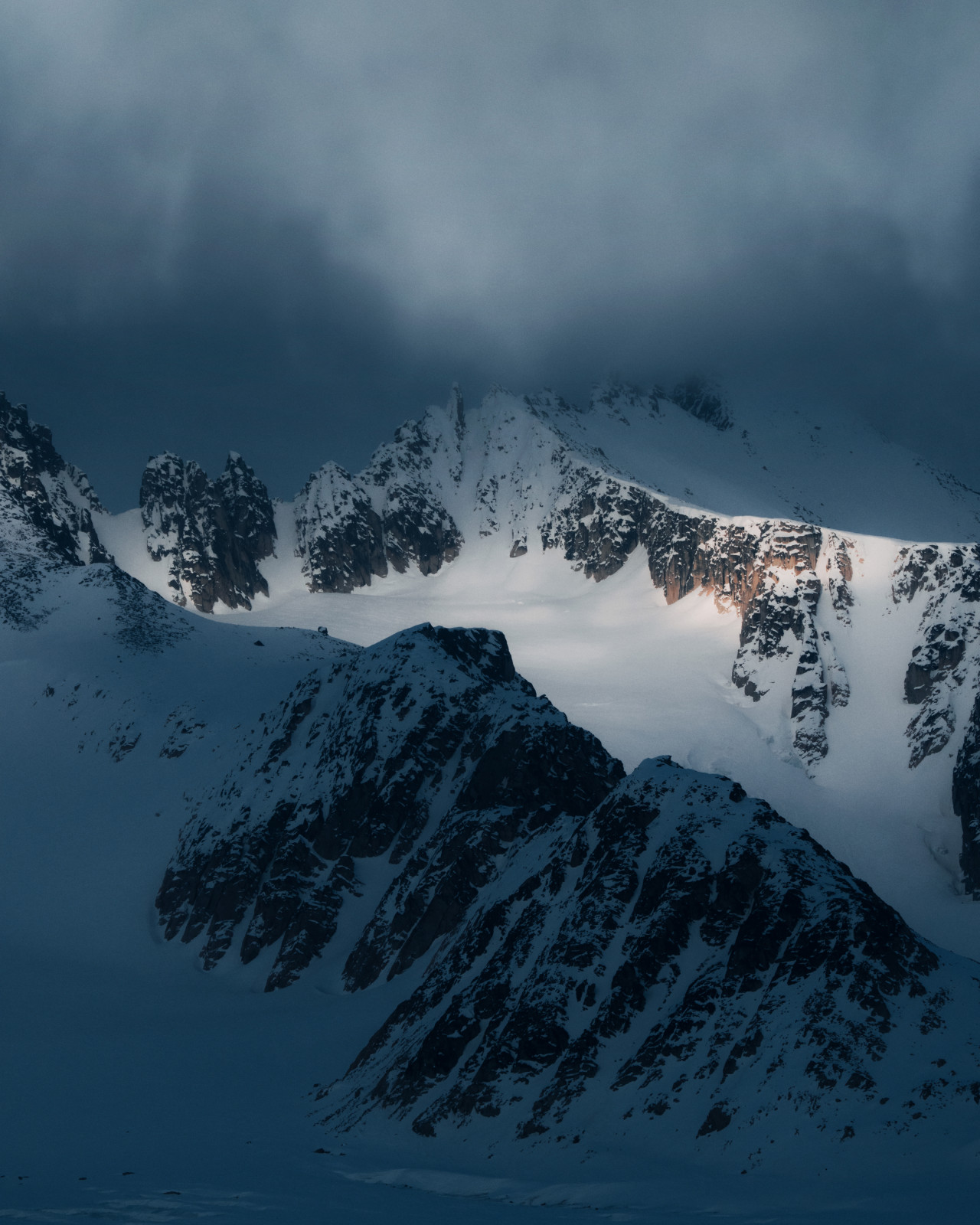
Svalbard Spring Micro Cruise
78°13’N, 15°38’E
A frozen fairytale of iceberg-strewn fjords, snowy peaks, and puzzle-piece sea ice – as animals take their first steps following winter.
- 12 guests
- 8 — 10 days

Svalbard Summer Micro Cruise
78°13’N, 15°38’E
Set sail in summer, when Svalbard blooms with life, the best time to spot wildlife in Europe’s last great wilderness.
- 12 guests
- 10 days

Svalbard Summer Solstice Micro Cruise
78°13’N, 15°38’E
Our longest photo tour sails when the midnight sun is at its zenith, providing 24-hour photo opportunities in the company of your pro photographer guide.
- 12 guests
- 10 days

Svalbard Summer Photo Tour with Paul Goldstein
78°13’N, 15°38’E
Paul Goldstein is a nature-photography heavyweight, a go-hard, all-hours maestro – and the perfect guide to take your wildlife photography up a gear (or 10) in Svalbard.
- 12 guests
- 10 days

Svalbard Circumnavigation Micro Cruise
78°13’N, 15°38’E
The big one. As the sea opens up under the midnight sun, take the unique opportunity to circumnavigate Svalbard, Europe’s last great wilderness.
- 12 guests
- 12 days

Svalbard Autumn Photo Tour with Virgil Reglioni
78°13’N, 15°38’E
Set off on a late-season adventure, when sunsets and sunrises cast spellbinding colours the archipelago, and capture the meltwater waterfalls of the Austfonna ice cap with top polar photographer Virgil Reglioni.
- 12 guests
- 12 days
The Expedition Micro Cruise concept


Other relevant articles



Phone
USA
USA+CAN Toll Free
AUS Toll Free
