
Ytre Norskøya | Svalbard’s Whaling Station and Burial Site

Just off the northwest coast of Spitsbergen lies Ytre Norskøya, a small island that once stood at the center of Arctic whaling in the 17th century. Today, its barren ridges and moss-covered graves are all that remain of the men who hunted bowhead whales and braved the High Arctic’s brutal elements.
As one of the most haunting historic sites in Svalbard, Ytre Norskøya offers a rare glimpse into the past—and a powerful reminder of the human cost of early polar exploration.

The meaning behind the name 'Ytre Norskøya'
The arid and rocky island of Ytre Norskøya is located on the northwest coast of Spitsbergen. In Norwegian, 'Ytre' means outer and 'Norskøya' means Norwegian Island. There is another small island south of Ytre Norskøya, known as Indre Norskøya or the 'Inner Norwegian Island'.
Ytre Norskøya was one of the largest whaling stations in Svalbard in the 1600s, even though it was not as famous as the legendary Smeerenburg station. Archaeological digs on the island have highlighted the harsh life of the men who worked to procure the precious items of whale blubber and bone.
Whaling history and the forgotten dead
The exact date of the discovery of Ytre Norskøya is not known. With the expeditions of Willem Barentsz and Henry Hudson bringing back reports of rich whaling grounds in the Arctic, whalers from England and Holland started arriving. The island was first documented by the Dutch explorers in the early 17th century and became a base for whalers as whaling gained popularity around 1610.
It is assumed that the whaling station on the island belonged to the Dutch whaling cartel Noordsche Compagnie and was established around 1619. The workers and explorers associated with the business were the first to chart the island. The whaling operations on the island continued till 1670.
The bay provides adequate protection against the weather and a broad beach that facilitates easy landings. A high lookout point on the island was ideal for ‘spotters’ for catching sight of the bowhead whales. The location of the island allowed the whaling ships and boats to set anchor. At the same time, there was enough wind to set sail at short notice.
The human cost of Arctic whaling
With danger being a constant companion, a whaler’s life in the 17th century was hard. Beyond accidents, drowning, and exposure, there was a high death rate from scurvy - resulting from a low-nutrition diet - among the men. Ytre Norskøya is counted among the largest burial sites in Svalbard, and the total number of graves found here is 165.
While the survivors used simple pine coffins to provide decent Christian burials, burying bodies under layers of permafrost is not simple. The reason is, they do not stay buried.
The annual cycle of freezing and thawing often results in a peculiar phenomenon- the coffins buried under the ground get raised up. Even today, in summer, the skeletal remains of the graves can be seen while visiting the island. At present, no burials are conducted in Svalbard and all dead bodies are sent to the mainland.
Generally, the frigid Arctic weather preserves human remains well. However, with rising global warming in the past three decades, factors like soil seepage and faster microbial decomposition are affecting the preservation conditions.

Protection and respect
To ensure preservation, all the whaling-era burial sites, including Ytre Norskøya, are protected cultural heritage. There is a security zone that extends 100 metres all around the graves. Visitors are not allowed to remove any objects from the site or disturb it in any manner
Archaeological excavations carried out between 1979 to 1981 on the island found that the textile material in the graves was well preserved. The skeletal remains, along with the jackets, woollen caps found in the grave, have proved that the men led a hard life of labour. Archaeologists have discovered that these were ordinary men who repaired and used their clothes for a long period. The items collected from the graves are kept in the Svalbard Museum.
Some burial kits in these graves have also revealed mosses not native to Svalbard. Initially puzzled by this, archaeologists learnt a poignant fact about the whalers from this observation. Since they were not sure if they might ever return to their homeland, they brought small pieces of home with them.
Ytre Norskøya is one of Svalbard's most haunting stops.
Few visitors ever reach it. Our small expeditions do — talk to an expedition specialist about which ones.
Visiting Ytre Norskøya: what to know
How to reach Ytre Norskøya
Visiting Ytre Norskøya is only possible via a cruise ship. Provided the weather remains favourable, you can land on the island on a boat. Landing is possible only during the Arctic summer when the sea remains mostly ice-free.
Since it is a protected heritage site, landings on the island are made under guidance. All traces of humans in Svalbard before 1946 are protected by law. You can observe the remains of the graves only from a distance. A guided tour also ensures that the visitors follow the rules and do not leave any refuse or litter behind that can be damaging to the fragile ecosystem.
Best time to visit Ytre Norskøya
The best time to visit Ytre Norskøya is between late June and early September. However, weather conditions and temperature can change quickly in the Arctic, making the conditions unfavourable for a visit. Since landings are only allowed on pre-defined sites, the weather remains a crucial factor in making them possible.
What you’ll see on Ytre Norskøya
Ytre Norskøya is a small island, and visits do not take more than a few hours. You can walk the path leading to the lower and upper lookout points on the island. In summer, a few flowering plants like Svalbard poppies and pygmy buttercups can be seen growing between the rocks. Some portions above the coastline are also covered by a beautiful cover of golden moss.
The path to the lookout points takes you past the graves and the foundations of the blubber ovens. Follow the rocky path along a ridge to reach the upper lookout point is at the top of a hill. It provides an expansive view of the fjord.

Wildlife in the area
Summer is the period of high bird activity on the island, and you can spot nesting sites of Arctic terns along the coastline. Other birds found here include guillemots, little auks, black guillemots and glaucous gulls. Walruses are not common, but occasional sightings have been made on the shoreline.
Polar bears are commonly seen around Ytre Norskøya, and the dangers of running into one are high. Guides look out for signs of bear activity and take necessary measures to ward off a bear if needed, without injuring or killing it.

Challenges of visiting: landing on a fragile landscape
The combination of strict environmental protocols and the fragile ecology makes Ytre Norskøya a sensitive destination. Visiting this remote island may not be possible if all conditions are not conducive. At any point, rough seas and shifting winds can make zodiac landings unsafe. For these reasons, trips can get cancelled last-minute to ensure the safety of the explorers.

Svalbard Spring Photo Tour
78°13’N, 15°38’E
Landscape photographers adore Svalbard in the early season, when puzzle-piece sea ice and snow-enrobed shorelines glow under pastel sunrises and sunsets.
- 12 guests
- 8 — 10 days

Svalbard Spring Photo Tour with Randy Hanna
78°13’N, 15°38’E
Head north with world-renowned photographer and tutor Randy Hanna, capturing the frozen Arctic landscape of Svalbard in the spring.
- 12 guests
- 10 days
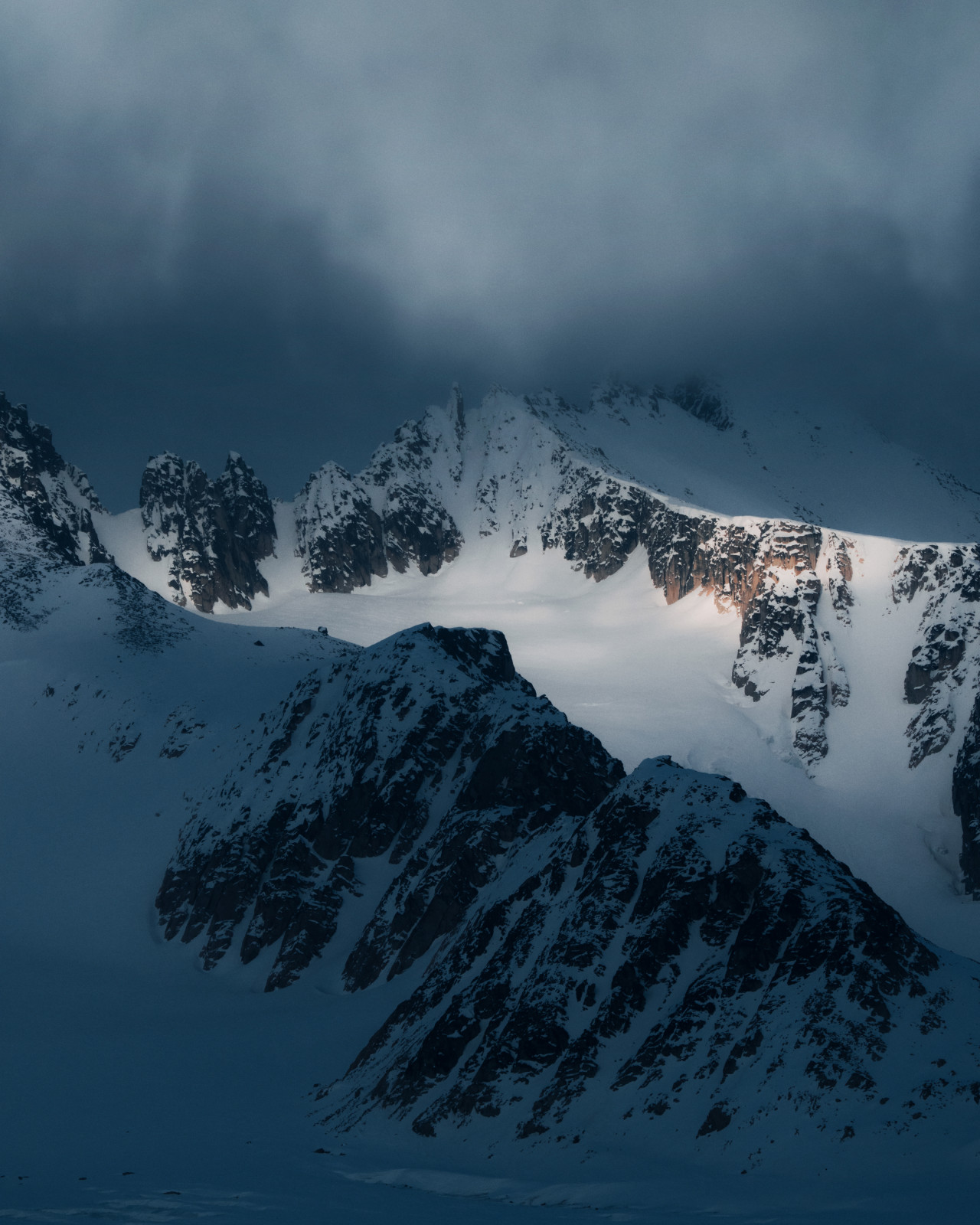
Svalbard Spring Micro Cruise
78°13’N, 15°38’E
A frozen fairytale of iceberg-strewn fjords, snowy peaks, and puzzle-piece sea ice – as animals take their first steps following winter.
- 12 guests
- 8 — 10 days

Svalbard Summer Micro Cruise
78°13’N, 15°38’E
Set sail in summer, when Svalbard blooms with life, the best time to spot wildlife in Europe’s last great wilderness.
- 12 guests
- 10 days

Svalbard Summer Solstice Micro Cruise
78°13’N, 15°38’E
Our longest photo tour sails when the midnight sun is at its zenith, providing 24-hour photo opportunities in the company of your pro photographer guide.
- 12 guests
- 10 — 12 days

Svalbard Summer Photo Tour with Paul Goldstein
78°13’N, 15°38’E
Paul Goldstein is a nature-photography heavyweight, a go-hard, all-hours maestro – and the perfect guide to take your wildlife photography up a gear (or 10) in Svalbard.
- 12 guests
- 10 days

Svalbard Summer Photo Tour with Randy Hanna
78°13’N, 15°38’E
Explore summertime Svalbard with nature photographer Randy Hanna, capturing intimate shots of wildlife in their stunning Arctic habitat.
- 12 guests
- 10 days

Svalbard Circumnavigation Micro Cruise
78°13’N, 15°38’E
The big one. As the sea opens up under the midnight sun, take the unique opportunity to circumnavigate Svalbard, Europe’s last great wilderness.
- 12 guests
- 12 days

Svalbard Autumn Photo Tour with Virgil Reglioni
78°13’N, 15°38’E
Set off on a late-season adventure, when sunsets and sunrises cast spellbinding colours the archipelago, and capture the meltwater waterfalls of the Austfonna ice cap with top polar photographer Virgil Reglioni.
- 12 guests
- 12 days
The graves are still there. The stories deserve to be heard in person.
Ytre Norskøya is one of the most moving landing sites in Svalbard. Book a free call and we'll tell you which expedition gets you there, and what else you'll see.
The Expedition Micro Cruise concept


Other relevant articles


Phone
USA
USA+CAN Toll Free
AUS Toll Free
Brochure
We use cookies to provide a better online experience. Please let us know if you agree to them. You can read our Privacy Policy for more information.

Join the Secret Atlas newsletter
Join the Secret Atlas newsletter
Thank you for signing up!
Welcome to Expedition Micro Cruising. Discover the difference.
We will be exclusively sharing with you our best-kept secrets. You'll receive first-hand expert advice and inspiring stories from our team of explorers, plus our latest news and offers.

Plan Your Journey
Speak to an Expedition Specialist
Book a Video Call
Speak face-to-face with an expedition specialist. Ask questions, explore ideas, and start shaping a journey built around you.
Book a Phone Call
Talk with an expedition specialist. Get clear, honest guidance to help you plan your next Expedition Micro Cruise.
Download your brochure
Just enter a few details to receive your brochure.