
Austfonna | Svalbard's Sleeping Giant of Ice

When you're sailing through the remote waters of Svalbard, there is one ice cap that immediately stands apart - Austfonna. This massive ice cap dominates the eastern landscape of Nordaustlandet, Svalbard's second-largest island, and it's one of those rare places where you can truly grasp the raw power of Arctic ice.
Covering approximately 7,800 km², Austfonna is experienced not as a collection of glaciers, but as a single, continuous body of ice flowing directly into the Arctic Ocean - a rare sight, and for many expedition cruises, one of the most memorable encounters of the journey.
The name Austfonna translates from Norwegian as 'East Ice,' a straightforward description that locals gave to this frozen giant.

Discovery by Adolf Erik Nordenskiöld
Swedish explorer Adolf Erik Nordenskiöld first documented Austfonna during his 1873 expedition to Svalbard, though Pomor hunters and whalers likely knew of its existence centuries earlier.
Nordenskiöld was surveying the archipelago's northern islands when he encountered this massive ice formation, and his detailed maps helped put Nordaustlandet on the scientific radar.
The real breakthrough in understanding Austfonna came much later - serious glaciological studies didn't begin until the 1950s and 1960s, when researchers started measuring ice thickness and movement patterns.
The most dramatic chapter in Austfonna's documented history occurred between 1936 and 1938, when Bråsvellbreen, the ice cap's largest outlet glacier, surged forward at an astonishing rate. This glacier, whose name means 'crashing ice stream,' lived up to its title by advancing several kilometres in just two years.
Norwegian scientists documented the event, watching as the ice pushed massive amounts of sediment and rock into the sea. It remains one of the most significant glacier surges ever recorded in Svalbard.


Where ice meets the sea
Austfonna sprawls across Nordaustlandet with an average thickness of around 560 meters, though some areas plunge much deeper. What makes the Austfonna ice cap particularly striking is how it flows directly into the Arctic Ocean through several outlet glaciers.
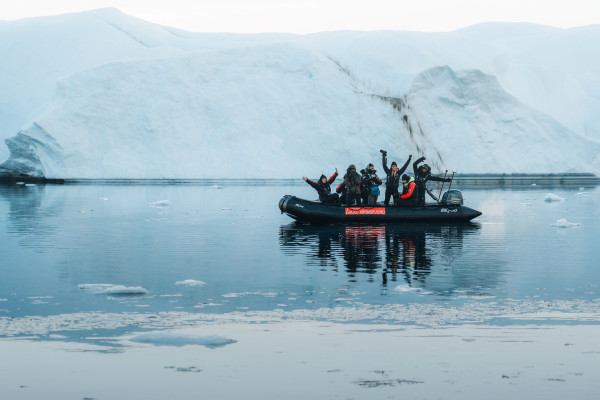
Bråsvellbreen creates one of the longest glacier fronts in the Northern Hemisphere, stretching approximately 200 kilometres along the southeastern coast. When conditions allow you to approach by sea, you'll see towering ice cliffs that drop straight into the water, creating an almost surreal boundary between frozen land and open ocean.
The ice cap feeds at least seven major outlet glaciers, each with its own character and movement patterns. Some flow quickly, surging forward in dramatic pulses, while others creep along at a glacial pace—literally.
Exposed layers in the ice cliffs reveal centuries of accumulated snowfall, offering a rare visual record of long-term ice formation and movement.
Scientists have been studying Austfonna for decades because it serves as an important indicator of climate patterns in the High Arctic, and what they're learning has implications far beyond Svalbard's shores.
When you can visit Austfonna
Here's the reality—visiting Austfonna is never guaranteed, even during the summer months when it's theoretically accessible. The window for expedition cruises to reach Nordaustlandet runs from late June through early September, but ice conditions and weather can change everything.
Heavy pack ice often blocks the waters around the island well into July, and some years it never clears enough for ships to safely approach. Strong winds, fog, and rough seas can also prevent vessels from getting close to the glacier fronts.
You won't find any roads leading to Austfonna, and there aren't any airports nearby where you can catch a convenient flight. The only way to experience this ice cap is by expedition ship during the brief Arctic summer.


Wildlife around the ice
The waters and shores around Austfonna support a surprising array of Arctic wildlife, particularly during the summer months when you'd be visiting. Polar bears regularly patrol the ice edges and coastlines here, hunting for ringed seals and bearded seals that haul out on the ice floes.
The combination of cold-water upwelling and glacial meltwater creates nutrient-rich conditions that attract fish, which in turn attract seals and the bears that hunt them.
Want to stand in front of Austfonna's ice wall?
Europe's largest ice cap — and one of the most striking sights in Svalbard. Talk to an expedition specialist.
You'll likely spot various seabirds nesting on the rare ice-free cliffs around Nordaustlandet. Little auks, black guillemots, and kittiwakes take advantage of the productive waters for feeding. Walruses sometimes haul out on beaches near the ice cap, and beluga whales occasionally appear in these waters during summer.
The ecosystem here depends entirely on the ice cap's presence—it influences ocean currents, water temperature, and nutrient distribution that support the entire food web.
Facts that bring the ice to life
Austfonna contains enough ice to cover the entire country of Cyprus in a layer roughly 200 meters thick—that's about 1,900 cubic kilometers of frozen water. If it all melted tomorrow (which it won't), global sea levels would rise by approximately five millimeters.
The bedrock beneath much of the ice cap actually sits below sea level, which means portions of it rest on underwater mountains or essentially float on the ocean itself. The ice cap's dome reaches an elevation of around 783 meters at its highest point, and can be very chilly even during summer months.
Meanwhile, the edges where it meets the sea remain relatively warmer, creating a complex thermal environment that influences how the ice moves and melts.
Scientists have drilled ice cores from Austfonna that contain air bubbles from thousands of years ago—tiny time capsules that preserve samples of the ancient atmosphere. These cores help researchers understand how Earth's climate has changed over millennia, making this remote ice cap a valuable archive of planetary history.

Experience Austfonna with Secret Atlas
Austfonna can only be approached during the narrow window when sea ice around Svalbard retreats enough to allow passage to Nordaustlandet — typically on mid-summer and early autumn expeditions. These late-season voyages offer the best chance of reaching the ice cap’s eastern margins, where outlet glaciers descend directly into the Arctic Ocean.
Secret Atlas operates expedition micro cruises with just 12 guests, allowing for flexible routing and close observation from deck and Zodiac when conditions permit. Our small vessels are designed to navigate ice-affected waters that remain inaccessible to larger ships, while experienced expedition leaders assess ice, weather, and calving activity in real time.
Reaching Austfonna is never guaranteed, and itineraries are planned with this uncertainty in mind. When access is possible, viewing Bråsvellbreen’s vast ice front from a small expedition ship is a defining Arctic experience. When ice prevents passage, voyages continue through alternative regions of Svalbard — a reflection of genuine expedition travel, shaped by the Arctic rather than imposed upon it.


Svalbard Summer Micro Cruise
78°13’N, 15°38’E
Set sail in summer, when Svalbard blooms with life, the best time to spot wildlife in Europe’s last great wilderness.
- 12 guests
- 10 days

Svalbard Summer Micro Cruise Lite
78°13’N, 15°38’E
Witness Svalbard alive with wildlife on this specially curated Expedition Micro Cruise, exploring the archipelago's summer highlights in a shorter time.
- 12 guests
- — days

Svalbard Summer Solstice Micro Cruise
78°13’N, 15°38’E
Our longest photo tour sails when the midnight sun is at its zenith, providing 24-hour photo opportunities in the company of your pro photographer guide.
- 12 guests
- 10 — 12 days

Svalbard Summer Photo Tour
78°13’N, 15°38’E
Venture north to photograph Svalbard as summer sweeps across the archipelago and the Arctic bursts into life.
- guests
- 10 days

Svalbard Circumnavigation Micro Cruise
78°13’N, 15°38’E
The big one. As the sea opens up under the midnight sun, take the unique opportunity to circumnavigate Svalbard, Europe’s last great wilderness.
- 12 guests
- 12 days

Svalbard Autumn Photo Tour
78°13’N, 15°38’E
Wildlife and landscape photographers rush to catch Svalbard at this unique part of the year, when languorous sunrises and sunsets paint the scenery in autumnal colours and far-flung destinations like Austfonna are still within reach.
- 12 guests
- 8 — 12 days
Want to see Austfonna's ice wall calve into the sea?
Austfonna is on several of our summer expeditions, ice conditions permitting. Book a free call and the team will tell you which expedition fits.
The Expedition Micro Cruise concept


Phone
USA
USA+CAN Toll Free
AUS Toll Free
Brochure
We use cookies to provide a better online experience. Please let us know if you agree to them. You can read our Privacy Policy for more information.

Join the Secret Atlas newsletter
Join the Secret Atlas newsletter
Thank you for signing up!
Welcome to Expedition Micro Cruising. Discover the difference.
We will be exclusively sharing with you our best-kept secrets. You'll receive first-hand expert advice and inspiring stories from our team of explorers, plus our latest news and offers.

Plan Your Journey
Speak to an Expedition Specialist
Book a Video Call
Speak face-to-face with an expedition specialist. Ask questions, explore ideas, and start shaping a journey built around you.
Book a Phone Call
Talk with an expedition specialist. Get clear, honest guidance to help you plan your next Expedition Micro Cruise.
Download your brochure
Just enter a few details to receive your brochure.