
The History of Arctic Exploration | From Barentsz to the North Pole

The call of the north
The Arctic has always held deep allure—cold, dangerous, and irresistible. For centuries, it lured explorers with its icy riddle of unreachable poles and elusive sea routes. Those who answered the call found few comforts and many graves, but the north also promised something no other place on Earth could: firsts. The first to chart, the first to cross, the first to stand at the top of the world.
From the 16th century’s earliest expeditions to the brutal race to the North Pole, the history of Arctic exploration is a saga of obsession, failure, triumph—and a stubborn refusal to accept the limits of human endurance. Along the way, nations competed for glory, scientists mapped the unknown, and Indigenous knowledge quietly sustained those who sought to conquer this vast, icy frontier.

The age of Arctic exploration begins: Barentsz, Hudson, and Baffin
Willem Barentsz: The first Arctic overwintering
While Indigenous peoples had lived in and navigated the Arctic for thousands of years, it wasn’t until the late 1500s that the region entered European consciousness in earnest.
During this era, European powers were racing to find new maritime routes to Asia. The Dutch Republic, seeking to bypass Spanish- and Portuguese-controlled passages to the south, turned its ambitions northward—toward a possible Northeast Passage above Russia.
One of their most determined navigators was Willem Barentsz, who led three voyages into uncharted Arctic waters. In 1596, he became the first European to document Svalbard, but his ship became trapped in ice and was crushed just off Novaya Zemlya.
With no way to escape, Barentsz and his crew overwintered in a hut they built from driftwood and ship timbers, known today as Het Behouden Huys (The Saved House), a feat that became the stuff of polar legends. After enduring brutal conditions from extreme cold, scurvy and persistent polar bear attacks, they attempted to escape by two open boats in June 1597.
Barentsz died en route on June 20, 1597, likely from illness and exhaustion. Remarkably, 12 of the 17 men survived, eventually rescued by a Dutch merchant ship. These voyages marked a defining chapter in Arctic exploration history.


Henry Hudson: Explorer of the Northeast Passage and Hudson Bay
As Dutch ambitions pushed east through the Arctic, England launched its own attempts to find a Northeast Passage to Asia. Henry Hudson, one of England’s most determined navigators, made four Arctic voyages between 1607 and 1611—driven by hopes of establishing new trade routes and national prestige.
His early expeditions were blocked by ice near Greenland, Spitsbergen (Svalbard), and Novaya Zemlya, mirroring the challenges faced by Barentsz. In 1609, while sailing for the Dutch East India Company, Hudson pivoted west and explored the river that now bears his name—the Hudson River—laying the groundwork for Dutch claims in North America.
On his final expedition in 1610, Hudson entered Hudson Bay, convinced he had finally found the passage to Asia. But as ice locked the ship in place and supplies dwindled, tensions rose. The crew, weary of the cold and Hudson’s leadership, grew mutinous.
In the summer of 1611, they acted—seizing control of the ship and setting Hudson, his teenage son, and seven loyal crewmen adrift in a small open boat. With no charts, no sails, and no food, they vanished into the Arctic fog.
No trace of Hudson was ever found. His fate remains one of the great unsolved mysteries of Arctic exploration—but his journeys helped expand European knowledge of the far north, and his name lives on in both the river and bay.
William Baffin: Mapping the edge of the known world
In the wake of Hudson’s disappearance, England’s interest in Arctic exploration didn’t fade. Instead, it shifted westward—toward the icy channels of what is now northern Canada. Among the most skilled and underrated navigators of this era was William Baffin (1584-1622).
Between 1612 and 1616, Baffin made a series of bold voyages to search for a Northwest Passage through the Arctic archipelago.
On his final journey in 1616, he sailed deep into a bay that would later bear his name—Baffin Bay— and reached a latitude of 78°N—a record that stood unbroken for two centuries. His charts were so accurate, Victorian-era explorers blushed at their own imprecisions.
Though Baffin never found the passage he sought, his legacy endures in the geography of the high Arctic—and in the accuracy with which he drew its edges.


Northeast Greenland National Park Micro Cruise
76°50'N, 23°10'W
The ultimate Greenland experience – a unique two-week adventure into Northeast Greenland National Park, the world’s largest national park, and Scoresbysund, the longest fjord system on Earth.
- 12 guests
- 11 — 13 days

Scoresbysund Autumn Micro Cruise
70°50’N, 25°00’W
An autumn micro cruise to Scoresbysund, East Greenland. For landscape lovers and aurora chasers – the ultimate expedition of Earth and sky.
- 12 guests
- 9 days

Scoresbysund Northern Lights Photo Tour
70°50’N, 25°00’W
Capture the heavens bursting with light above the monumental icebergs and high-drama landscape of Scoresbysund.
- 12 guests
- 8 — 9 days
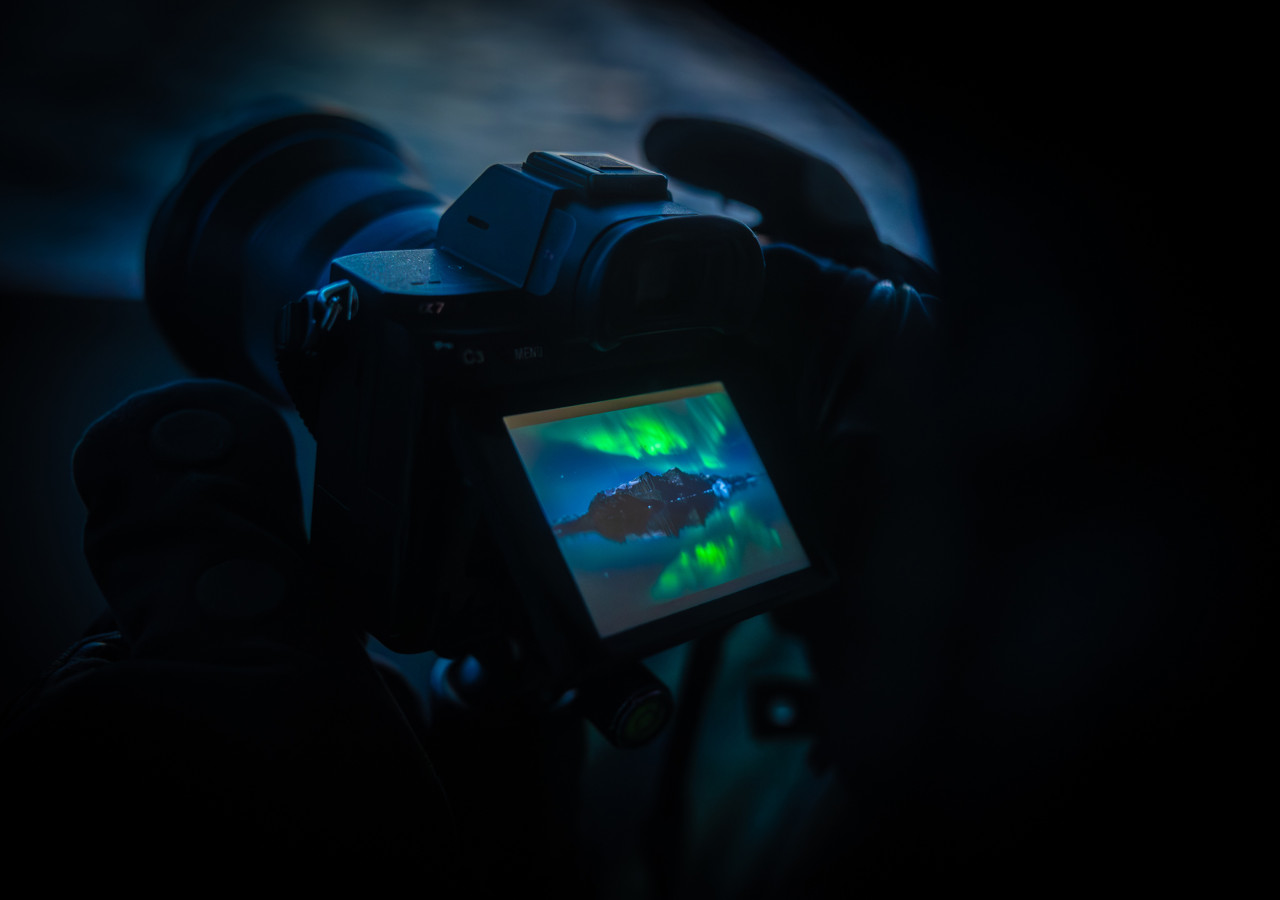
Scoresbysund Northern Lights Photo Tour with Virgil Reglioni
70°50’N, 25°00’W
With 0% light pollution and insane iceberg sculptures, paired with the world’s finest aurora borealis photographer, you’re in for a treat.
- 12 guests
- 9 days

Scoresbysund Northern Lights Photo Tour with Randy Hanna
70°50’N, 25°00’W
Photograph the northern lights illuminating the skies above Scoresbysund with nature photography legend Randy Hanna.
- 12 guests
- 9 days
The quest for the Northwest Passage
As colonial powers expanded, so too did the allure of the fabled Northwest Passage—a potential direct sea route through the Arctic to Asia.
By the 18th and 19th centuries, it had become the Holy Grail of Arctic exploration—a shortcut through Canada’s frozen archipelago that promised faster trade, national prestige, and global power.
The passage remained hidden, locked behind ice and myth. But that didn’t stop explorers from trying. Some would map coastlines. Others would vanish. One would succeed.
James Cook: Testing the northern limits of the Pacific
In the 1770s, the British Admiralty hoped the Northwest Passage could be found from the Pacific side. Captain James Cook, already renowned for his global voyages, was sent to explore the uncharted Arctic waters north of Alaska.
On his third and final expedition, Cook sailed through the Bering Strait and followed the icy coastlines of Alaska and eastern Siberia, reaching 70°N before being turned back by impassable ice.
Though he failed to find the passage, Cook’s detailed charts of the Pacific Arctic were among the most accurate of the time. His work helped define the limits of navigation from the west and influenced the course of future Arctic expeditions.


Sir John Franklin: The Arctic’s greatest mystery
By the mid-1800s, Britain had invested heavily in Arctic exploration, and Franklin’s 1845 expedition was meant to be its crowning achievement. Tasked with finally navigating the Northwest Passage, Franklin set off with two ships, Erebus and Terror, and 128 men—equipped with the best technology of the age.
They vanished. For years, no trace was found. Instead of triumph, Franklin’s expedition became one of the Arctic’s greatest mysteries and ultimate failures. Dozens of search missions followed, many uncovering fragments of the route—but never the full story. It wasn’t until the 21st century that the wrecks of Erebus and Terror were finally discovered, still locked in ice.
In the end, it was Franklin’s disappearance—not his discoveries—that helped piece together the true shape of the Northwest Passage.
Roald Amundsen: The first to conquer the Northwest Passage
After centuries of failed attempts, Roald Amundsen finally achieved what so many had died trying to do: navigate the full length of the Northwest Passage. Between 1903 and 1906, aboard the small sailing ship Gjøa, he and his crew slowly threaded their way through the ice-choked channels of Arctic Canada.
Amundsen’s success came not from brute force, but from humility and precision. He spent winters in the Arctic, traveled light, and most importantly, learned from the Inuit—adopting their clothing, sledging techniques, and understanding of the land.
Amundsen didn’t try to conquer the Arctic. He adapted to it. He used small crews, moved with purpose, and let the land lead. The age of the gentleman explorer was over. The age of the professional had arrived.

Science and Strategic advances in Arctic exploration
By the late 19th century, the Arctic was no longer just a race for glory. It had become a proving ground for science, strategy, and survival. Explorers began to plan with precision, relying on meteorology, mapping, and long-term logistics—often inspired by the Inuit and shaped by hard lessons from past failures.
Adolf Erik Nordenskiöld: First to navigate the Northeast Passage
In 1878, Finnish-Swedish explorer and geologist Adolf Erik Nordenskiöld made history by becoming the first to navigate the entire Northeast Passage—the long-sought Arctic route along the Siberian coast. Sailing aboard the steamship Vega, his expedition was the first to link the Atlantic and Pacific Oceans entirely via Arctic waters.
Unlike the heroic quests of earlier explorers, Nordenskiöld approached the Arctic with a scientist’s eye. He combined meticulous planning, detailed ice observations, and the backing of Sweden’s scientific elite. Though Vega was frozen in for one winter, the journey proved that the passage was real—and navigable under the right conditions.
Nordenskiöld’s expedition marked a turning point: science had finally outpaced speculation in the Arctic. His voyage opened the door for future research, mapping, and polar logistics—and showed that success no longer relied on luck or legend, but on knowledge.


Fridtjof Nansen: The Fram expedition and the Arctic drift
In 1893, Norwegian explorer Fridtjof Nansen launched the Fram expedition—a plan so bold it bordered on madness. He froze his ship into the Arctic pack ice, hoping it would drift across the ocean with the polar current.
When the drift fell short of the Pole, he and Hjalmar Johansen left the safety of the ship at 84°04′N, 102°27′E, heading toward the Pole on foot, skis, and sledges pulled by dogs. No one had ever attempted anything like it.
in April 1895, they reached 86°13.6′N, 95°55′E—farther north than any human in history. Just two men, in the heart of the Arctic, battling chaos with grit, skis, and a rifle.
They endured brutal cold, shifting ice, and near-starvation before turning back. Nansen returned to Norway a hero. He had proven the Arctic drift theory, collected groundbreaking scientific data, and redefined Arctic exploration as something that could be calculated, scientific, and survival-driven.
His legacy was not just one of courage-but of changing how the Arctic could be approached.
Salomon August Andrée: The daring balloonist who aimed to soar over the North Pole
Nansen had shown that the Arctic could be charted through patient drift across the pack ice, but not all explorers shared his steady, ground-based approach. Just a year later, Swedish engineer Salomon August Andrée set his sights higher—literally—launching the 1897 Arctic balloon expedition from Virgohamna in Svalbard, aiming to fly over the North Pole in the hydrogen balloon Örnen ('The Eagle'), riding the polar winds to Alaska or Siberia.
Backed by Alfred Nobel and the Swedish Academy of Sciences, Andrée placed his faith in the balloon’s novel technology, trusting drag ropes and sails could guide it across the Pole.
The launch was met with celebration, but optimism faded quickly. Within two days, the balloon was battered by icing, leaks, and unpredictable winds, forcing a crash landing on the pack ice. Alongside Nils Strindberg and Knut Frænkel, Andrée began a desperate trek across the floes, vanishing into the Arctic’s icy vastness. For more than thirty years, their disappearance remained one of polar exploration’s great mysteries—until a remote island yielded the first clues to their fate.
Their final camp and journals, uncovered 33 years later on Kvitøya, Svalbard, revealed a gripping story of courage and endurance undone by flawed aeronautics and harsh conditions—a stark contrast to the more reliable, ground-based methods that ultimately shaped successful Arctic exploration.

Design your own private expedition micro cruise with Secret Atlas
Share the journey with those who matter most.
The race to the North Pole
By the turn of the 20th century, there was only one goal left in Arctic exploration: the North Pole. It wasn’t about trade routes anymore—it was about prestige. Being first to stand at the top of the world became the ultimate national and personal triumph. But the route was uncertain, the ice ever-shifting, and the truth often hard to prove.
Robert Peary and Matthew Henson: First to the North Pole?
In 1909, Robert Peary set out from Ellesmere Island with a single goal: to become the first person to reach the North Pole. His team included trusted companion Matthew Henson—a seasoned Arctic explorer fluent in Inuktitut and a group of Inuit guides and dog teams, whose survival skills were essential to the journey.


This wasn’t exploration as usual. Peary’s crew ran a tight, military-style relay known as the ‘Peary system’, leapfrogging supplies forward over the tortured chaos of drifting ice floes, pressure ridges, and open leads. Temperatures plunged to minus 50°F. Frostbite was just part of the dress code.
By April 6, 1909, Peary, Henson, and their Inuit team powered across the last miles to the top of the world—or so Peary claimed.
The achievement was long celebrated, but doubts emerged. Navigation records were incomplete, and it was Henson, not Peary, who likely stepped on the Pole first. Recognition came late. Decades later, Henson was honoured as a key figure in the expedition—an Arctic pioneer whose contributions helped define a turning point in polar history.
Frederick Cook: The 1908 North Pole Controversy
Just days before Peary announced he’d reached the North Pole, Frederick Cook, an American physician and explorer, made his own claim: he said he’d stood at 90° North a full year earlier, in April 1908, accompanied by two Inuit men.
Cook had previously served on both Arctic and Antarctic expeditions—including one with Peary—but now found himself in direct rivalry with his former commander. His announcement briefly shocked the world. Newspapers debated it. Supporters rallied.
But Cook lacked navigational records to prove his journey. And by the time he returned to civilisation, Peary’s claim had already taken hold.


Wally Herbert: The First Verified Surface Journey to the North Pole
The first fully documented and undisputed overland journey to the North Pole didn’t happen in the era of Peary or Cook. It came in 1969, when Wally Herbert’s British Trans-Arctic Expedition slogged from Alaska across the Arctic Ocean to Svalbard, via the Pole. No shortcuts. Just 3,800 miles of drifting ice, bone-crushing cold, and sixteen brutal months of survival.
Using traditional Inuit sleds, polar-tested diets, and sheer discipline, they did what no one before had managed: cross the Pole on foot, with independent verification and satellite confirmation.
Backed by major scientific institutions like the Royal Geographical Society, the expedition was as much about precision as perseverance. They trained in Arctic conditions, lived off pemmican, dried meats, and slabs of fat, and when supplies ran low, they hunted seals. For sixteen brutal months, they battled hunger, frostbite, and mental exhaustion in a frozen world that wanted them dead.
Many polar historians consider Herbert’s expedition the only undisputed surface conquest of the North Pole.

Svalbard Spring Photo Tour
78°13’N, 15°38’E
Landscape photographers adore Svalbard in the early season, when puzzle-piece sea ice and snow-enrobed shorelines glow under pastel sunrises and sunsets.
- 12 guests
- 8 — 10 days

Svalbard Spring Photo Tour with Randy Hanna
78°13’N, 15°38’E
Head north with world-renowned photographer and tutor Randy Hanna, capturing the frozen Arctic landscape of Svalbard in the spring.
- 12 guests
- 10 days
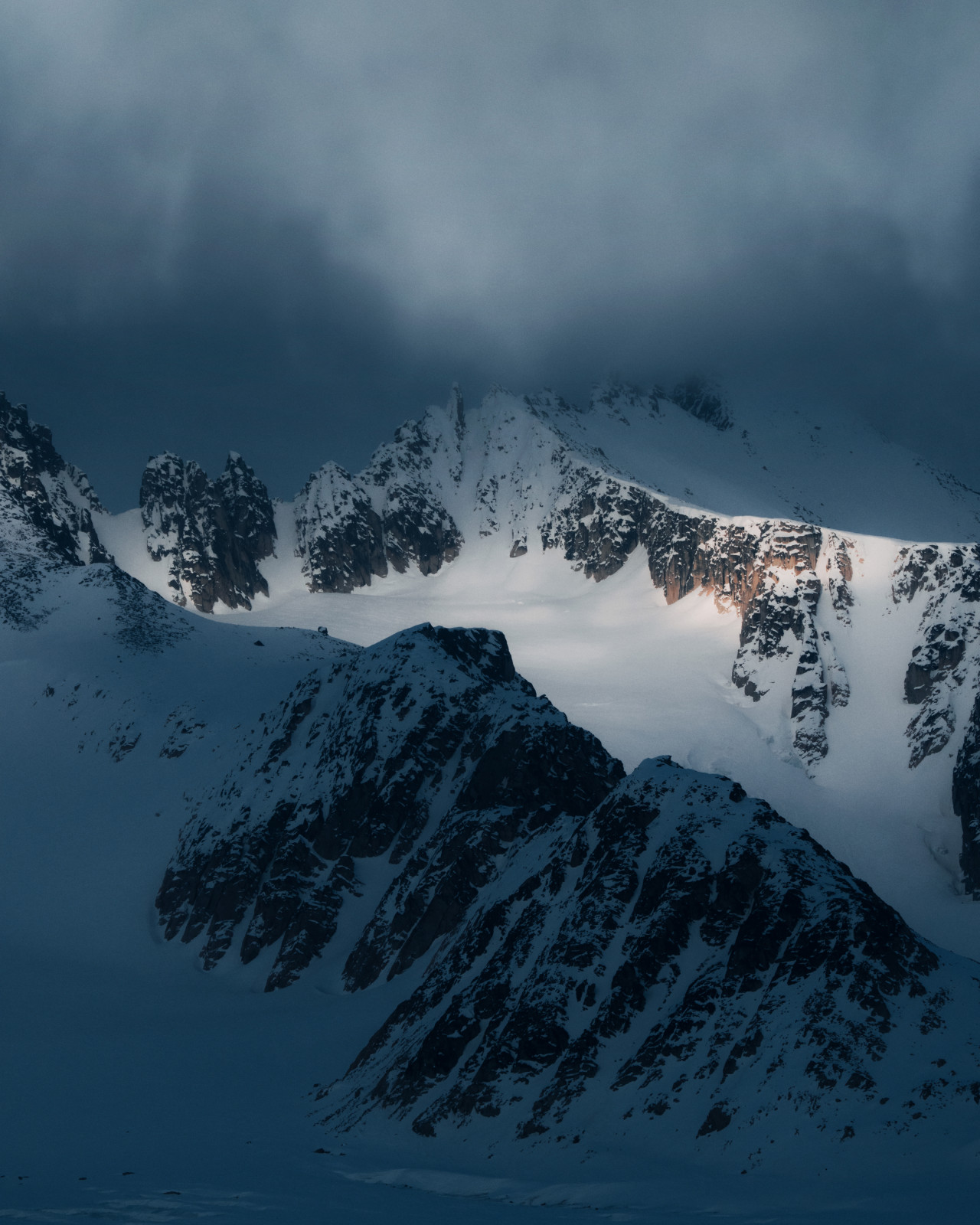
Svalbard Spring Micro Cruise
78°13’N, 15°38’E
A frozen fairytale of iceberg-strewn fjords, snowy peaks, and puzzle-piece sea ice – as animals take their first steps following winter.
- 12 guests
- 8 — 10 days

Svalbard Summer Micro Cruise
78°13’N, 15°38’E
Set sail in summer, when Svalbard blooms with life, the best time to spot wildlife in Europe’s last great wilderness.
- 12 guests
- 10 days

Svalbard Summer Solstice Micro Cruise
78°13’N, 15°38’E
Our longest photo tour sails when the midnight sun is at its zenith, providing 24-hour photo opportunities in the company of your pro photographer guide.
- 12 guests
- 10 — 12 days

Svalbard Summer Photo Tour with Paul Goldstein
78°13’N, 15°38’E
Paul Goldstein is a nature-photography heavyweight, a go-hard, all-hours maestro – and the perfect guide to take your wildlife photography up a gear (or 10) in Svalbard.
- 12 guests
- 10 days

Svalbard Summer Photo Tour with Randy Hanna
78°13’N, 15°38’E
Explore summertime Svalbard with nature photographer Randy Hanna, capturing intimate shots of wildlife in their stunning Arctic habitat.
- 12 guests
- 10 days

Svalbard Circumnavigation Micro Cruise
78°13’N, 15°38’E
The big one. As the sea opens up under the midnight sun, take the unique opportunity to circumnavigate Svalbard, Europe’s last great wilderness.
- 12 guests
- 12 days

Svalbard Autumn Photo Tour with Virgil Reglioni
78°13’N, 15°38’E
Set off on a late-season adventure, when sunsets and sunrises cast spellbinding colours the archipelago, and capture the meltwater waterfalls of the Austfonna ice cap with top polar photographer Virgil Reglioni.
- 12 guests
- 12 days
Nobile & Amundsen: The First Flight Over the North Pole
By the 1920s, Arctic ambition had taken to the skies. Umberto Nobile, an Italian airship engineer and general, teamed up with legendary Norwegian explorer Roald Amundsen to achieve what no one had before: flying across the Arctic Ocean and over the North Pole.
In 1926, aboard the Italian-designed airship Norge, Umberto Nobile and Roald Amundsen launched from Ny-Ålesund, a remote settlement in Svalbard, and became the first to fly over the North Pole, eventually landing in Alaska. It was a triumph of international collaboration—Italian innovation, Norwegian polar experience, and backing from American explorer Lincoln Ellsworth.
But their alliance was short-lived.


In 1928, Nobile returned to the Pole in a new airship, the Italia, this time under Italy’s flag. On the return journey, disaster struck—the Italia crashed on the sea ice. A massive rescue mission followed, drawing help from multiple nations.
Amundsen, flying in to assist, disappeared over the Arctic and was never found.
Though Nobile survived, the crash and its aftermath ignited political backlash and debate. Yet his place in Arctic history remains secure—as the engineer behind the first verified flight over the North Pole, and a central figure in one of the most tragic episodes in polar exploration.
Indigenous knowledge: The Backbone of Arctic Exploration
Long before European expeditions charted icy maps and claimed polar ‘firsts,’ the Arctic was already well known—explored, understood, and inhabited for thousands of years by Inuit, Chukchi, Sámi, and other Indigenous peoples.
These communities knew the Arctic’s rhythms: when to travel, where to hunt, how to build shelters that could withstand a polar night. They didn’t merely survive—they thrived—by passing down generational knowledge through experience and oral tradition.
Many of the most celebrated polar expeditions—particularly in the Canadian Arctic and Greenland—relied heavily on this knowledge. Roald Amundsen, for example, openly credited the Inuit for teaching him essential skills: using dog sleds, dressing in furs, reading ice conditions, and living off the land.
Fridtjof Nansen, during his 1888 crossing of Greenland, adopted Inuit techniques that would later prove vital during his daring Fram expedition to reach the North Pole. Stranded in the polar night, he re-applied that knowledge—down to his sled design and fur clothing—to survive months adrift in the Arctic ice.
Matthew Henson, Peary’s closest companion on the 1909 North Pole expedition, not only spoke Inuktitut but lived alongside Inuit communities for years. His cultural fluency and survival expertise made him indispensable to the journey.
These weren’t borrowed tricks—they were lifelines, learned through humility and respect.
Today, a new era of exploration is emerging—one that listens more closely to Indigenous voices, values traditional ecological knowledge, and recognizes that the Arctic’s future depends on the people who have known it longest.
→ At the heart of this heritage lies Inuit Qaujimajatuqangit—Inuit traditional knowledge—built from centuries of observing the ice, wildlife, and weather patterns.
Legacy of Arctic Exploration
For centuries, the Arctic was seen as a blank space to conquer—a test of endurance, mapped by those who sought fame at the edges of the known world.
But exploration left more than names on charts. It shaped how we see the Arctic—sometimes with wonder, often with misunderstanding.
Today, that legacy is being redefined. Modern explorers return not to claim, but to learn. The Arctic is no longer a mystery—it’s a living, changing region, and its future depends on those who approach it with humility and respect.
Live this history for yourself—stand beneath the mast where the first airship crossed the North Pole, sail past the coastlines once charted by polar legends, and experience the Arctic not as a conqueror, but as a caretaker.
With Secret Atlas, you don’t just follow in the footsteps of explorers—you become an ambassador for the Arctic, helping preserve its stories, wildlife, and fragile beauty for future generations.
FAQs
Who were the most famous Arctic explorers?
Willem Barentsz, Henry Hudson, James Cook, Sir John Franklin, Fridtjof Nansen, Roald Amundsen, Robert Peary, and Matthew Henson are key figures in Arctic exploration history.
What was the goal of early Arctic exploration?
Early Arctic exploration was driven by the search for trade routes—like the Northeast and Northwest Passages—along with scientific discovery, national prestige, and territorial ambition.
Who first discovered the Arctic?
Indigenous peoples have lived in the Arctic for millennia. Europeans first documented it with Barentsz’s voyage in the 16th century.
Did Robert Peary really reach the North Pole?
Peary claimed to reach it in 1909, but his records are disputed. The journey relied heavily on Matthew Henson and Inuit guides.
What role did Indigenous peoples play in Arctic exploration?
Inuit knowledge and tools were essential to survival. Clothing, sledges, hunting techniques, and local geography enabled many expeditions to succeed.
What is the Northwest Passage and who discovered it?
The Northwest Passage is a sea route through Canada’s Arctic archipelago. Franklin attempted it but didn’t return.; Amundsen was the first to fully navigate it in 1906 on his ship Gjøa.
What was the first successful Arctic expedition?
Willem Barentsz’s overwintering in Novaya Zemlya was a milestone. Nansen’s first crossing on Greenland and his Farthest North on Fram was a feat. Amundsen’s successful Northwest Passage navigation was a tour de force.
Other relevant articles

The History of Arctic Tourism | From First...
The History of Arctic Tourism | From First Explorations to Today’s Thriving Market

John Franklin’s Quest for the Northwest Pa...
John Franklin’s Quest for the Northwest Passage | The Lost Arctic Expedition

Christiane Ritter | The Woman Who Spent an...
Christiane Ritter | The Woman Who Spent an Arctic Winter in an Isolated Svalbard Cabin

Phone
USA
USA+CAN Toll Free
AUS Toll Free
Brochure
We use cookies to provide a better online experience. Please let us know if you agree to them. You can read our Privacy Policy for more information.

Join the Secret Atlas newsletter
Join the Secret Atlas newsletter
Thank you for signing up!
Welcome to Expedition Micro Cruising. Discover the difference.
We will be exclusively sharing with you our best-kept secrets. You'll receive first-hand expert advice and inspiring stories from our team of explorers, plus our latest news and offers.

Plan Your Journey
Speak to an Expedition Specialist
Book a Video Call
Speak face-to-face with an expedition specialist. Ask questions, explore ideas, and start shaping a journey built around you.
Book a Phone Call
Talk with an expedition specialist. Get clear, honest guidance to help you plan your next Expedition Micro Cruise.
Download your brochure
Just enter a few details to receive your brochure.