
Nightingale Island | Volcanic Seabird Stronghold in the South Atlantic

Nightingale Island at a glance
Location: South Atlantic Ocean, Tristan da Cunha archipelago, British Overseas Territory of Saint Helena, Ascension and Tristan da Cunha.
Distance: 2,800 km from the nearest landmass, midway between South America and South Africa.
Status: Uninhabited. A small research hut, volcanic cliffs, tussock grass, and very little else.
Wildlife: Up to 3 million pairs of great shearwater. Three breeding albatross species. Northern rockhopper penguins. Sub-Antarctic fur seals. Endemic Nightingale Island bunting and Tristan thrush.
Designation: BirdLife International Important Bird Area.
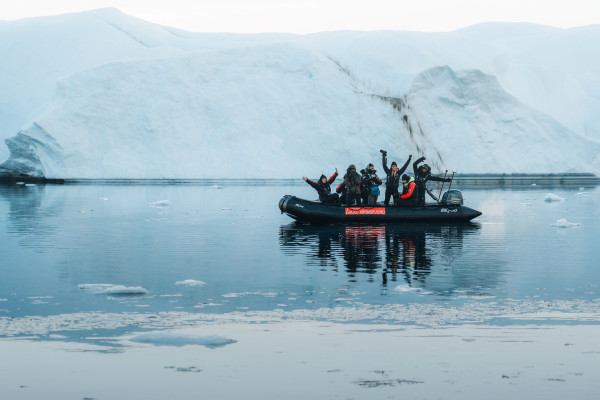
Access: Zodiac landings only, weather permitting. There is no port and no jetty.
Where is Nightingale Island in the South Atlantic?
Nightingale Island is part of the Tristan da Cunha group, the most remote inhabited archipelago in the world. Tristan itself has a population of around 240. The neighbouring islands (Nightingale, Inaccessible, Gough) are uninhabited. There are no flights to the archipelago. The only way to reach Nightingale is by ship, and the only way to land is by Zodiac onto rocky shores in a sea state that allows it.

Antarctic Spring Micro Fly Cruise - Sail One Way
54°16’S, 36°30’W
Sail across the Drake Passage and explore Antarctica in spring on a 44-guest Micro Cruise.
- guests
- 9 days

Antarctic Spring Micro Fly Cruise
54°16’S, 36°30’W
Skip the Drake Passage to awakening Antarctica in spring on a 44-guest Fly & Cruise. Witness penguins courting, whales returning, glittering pack ice, and thawing fjords—uncrowded and flexible.
- guests
- 10 days

Antarctic Christmas Micro Fly Cruise
54°16’S, 36°30’W
Experience a Christmas like no other in Antarctica on a 44-guest Fly & Cruise. Penguin chicks, whales, and glittering icebergs await in an uncrowded, flexible adventure.
- guests
- 10 days

Antarctic New Year Micro Fly Cruise
54°16’S, 36°30’W
Welcome the New Year in Antarctica on a 44-guest Fly & Cruise expedition. Witness penguin chicks taking their first steps, whales returning, and towering icebergs in an uncrowded, flexible polar adventure.
- guests
- 10 days

Antarctic Circle Micro Fly Cruise
54°16’S, 36°30’W
Sail beyond the legendary Antarctic Circle with just 36 guests. Explore pristine ice, wildlife-rich bays, and iconic sites without crowds, and free from rigid schedules.
- guests
- 10 days

Antarctic Summer Micro Fly Cruise — Sail One Way
54°16’S, 36°30’W
Fly one way and sail the other across the legendary Drake Passage on a 44-guest Antarctic expedition. See summer’s penguin chicks, whales and sculpted ice—uncrowded and free from rigid schedules.
- guests
- 9 days

Antarctic Autumn Fly Micro Cruise — Sail One Way
54°16’S, 36°30’W
Sail the Drake Passage once on a 44-guest Fly & Cruise expedition to Antarctica in autumn. Golden light bathes bustling penguin colonies, playful seals, and whales at their seasonal peak.
- guests
- 9 days

Falklands, South Georgia and Antarctica Micro Cruise
Combine Falklands, South Georgia and Antarctica on a 78-guest cruise expedition in Spring. Follow in Shackleton’s footsteps, witness penguin chicks and whales, and enjoy uncrowded, pristine landscapes.
- 78 guests
- 21 days
Why visit Nightingale Island
In seabird terms, Nightingale is one of the great places on Earth. The cliffs and tussock grasses hold breeding populations at a density that has to be seen to be understood: up to three million pairs of great shearwater on a single island, three species of breeding albatross (Tristan, Atlantic yellow-nosed, sooty), Northern rockhopper penguin colonies along the rocky shores, and endemic land birds (Nightingale Island bunting, Tristan thrush) that exist almost nowhere else.
The island is volcanic, young in geological terms, and shaped by wind and ocean. Sub-Antarctic fur seals haul out on the rocks. The horizon holds Stoltenhoff, Middle, and Alex islands, with Tristan da Cunha visible on a clear day. No marked trails, no interpretation boards, no shop. What there is, is an ecosystem operating largely on its own terms.


How Secret Atlas gets you to Nightingale Island
Reaching Nightingale is one thing. Landing on it is another. The conditions decide every time, and there is no overriding them. What changes with scale is the response when a window opens.
Small group, fast Zodiac launch. With 36 guests on an Expedition Micro Cruise, the Zodiacs are in the water in minutes when a weather window opens. Larger ships need over an hour to land a single rotation.
All guests ashore in one go. No rotations, no waiting on board while half the ship lands.
Readiness over rotation. A planned landing at Tristan that gives way to a Nightingale window can be acted on without disrupting the rest of the voyage.
Working naturalists on board. Ornithologists who identify seabirds by silhouette, call, and behaviour, all within speaking distance of every guest.
Frequently asked questions about Nightingale Island Cruises
How do you get to Nightingale Island?
The only way to reach Nightingale Island is by ship. There are no flights to the Tristan da Cunha archipelago. Voyages to the region typically sail from Cape Town, South Africa, and Nightingale is usually visited alongside Tristan da Cunha, Inaccessible Island, and (where possible) Gough Island.
Can you land on Nightingale Island?
A landing depends entirely on the weather, the swell, and the wind. When conditions allow, Zodiacs come ashore onto rocky landings. When they do not, a Zodiac cruise along the coast is the alternative. Smaller vessels with faster launch times have the advantage when the window is narrow.
What wildlife will I see on Nightingale Island?
The headline species are the Northern rockhopper penguin, three breeding albatross species (Tristan, Atlantic yellow-nosed, sooty), great shearwater in the millions, and sub-Antarctic fur seals. Endemic land birds include the Nightingale Island bunting and Tristan thrush. The surrounding waters also hold dolphins, whales, and seabirds in feeding aggregations.
When is the best time to visit Nightingale Island?
The Southern Hemisphere spring and summer (October to March) is the standard window, when breeding activity peaks and weather is most likely to allow a landing.
Visit Nightingale Island on a Secret Atlas Expedition Micro Cruise
Nightingale Island rewards the right scale of operation. A small group, a fast Zodiac launch, and a captain ready to take the weather window when it opens are the difference between a landing and a view from the deck.
If a voyage to Tristan da Cunha and Nightingale Island is on your radar, get in touch. The team will walk you through current availability, what the South Atlantic itinerary involves, and the realistic expectations for landings in one of the most remote corners of the planet.
Enquire about Nightingale Island Expedition Micro Cruises
See available South Atlantic voyages
Other relevant articles

#19 Introducing Polar Athena: Why Expedition ...
Introducing Polar Athena: Why Expedition Micro Cruises and Small-Ship Tourism Matter

#20 Decoding the Ocean | Meet the Scientists U...
Decoding the Ocean | Meet the Scientists Unlocking Arctic Secrets

#18 Polar Athena | A Legendary Vessel for Pola...
Polar Athena | A Legendary Vessel for Polar Exploration and Scientific Discovery


Phone
USA
USA+CAN Toll Free
AUS Toll Free
