
D'Hainaut Island | Whaling History and Gentoo Colonies

D'Hainaut Island at a glance
Location: Mikkelsen Harbour, on the south side of Trinity Island, Palmer Archipelago. Coordinates 63°54′S 60°47′W.
Size: A small rocky islet, less than half a square mile.
Discovery: Charted by Jean-Baptiste Charcot's French Antarctic Expedition (1908-1910). Named in 1952 by the sixth Chilean Antarctic Expedition for Lieutenant Ladislao D'Hainaut.
Historic feature: Refuge Caillet-Bois, an Argentine emergency shelter inaugurated in 1954, renamed in 1977, and rebuilt most recently in 2017.
Whaling past: Whale vertebrae and bones along the beach, remnants of a major sealing and whaling site in the 1800s and early 1900s.
Wildlife: Gentoo penguin colonies, Weddell and fur seals, kelp gulls, skuas, snowy sheathbills, Antarctic terns.
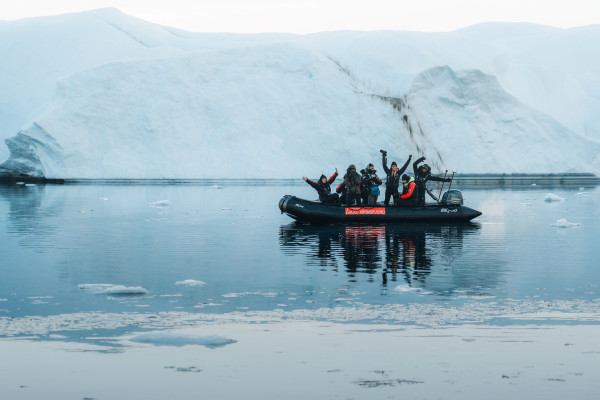
Access: Zodiac landing. The captain navigates the shallow reefs of the bay on the approach.
Where is D'Hainaut Island in Antarctica?
D'Hainaut Island sits inside Mikkelsen Harbour, a small bay on the south side of Trinity Island in the Palmer Archipelago. The harbour itself is sheltered by Trinity Island's bulk and ringed by ice cliffs. Reefs lie partly submerged across the entry, and the captain reads the approach carefully to bring the ship in close. For many voyages, D'Hainaut is among the first true Antarctic landings of the trip after the Drake Passage crossing.


Why visit D'Hainaut Island on an Antarctic Peninsula voyage
D'Hainaut is a layered site. The wildlife is the immediate draw: a working gentoo colony spread across the rocks, Weddell seals hauled out on the snow, fur seals working the shoreline, and skuas and Antarctic terns nesting on the ridges above. The headland sheaths in fresh snow well into the summer, and the contrast with the dark rock makes it one of the more photogenic stops on a Peninsula itinerary.
The other layer is human. The beach is dotted with whale vertebrae and processing-era bones, the unvarnished evidence of a site that was heavily worked by sealing and whaling vessels in the 1800s and into the early 1900s. The small red Argentine refuge, Refuge Caillet-Bois, sits above the landing as a quieter reminder of more recent occupation. D'Hainaut is one of the few Antarctic visitor sites where guests can roam more freely across the island, working around the artifacts and the wildlife rather than walking a fixed line.

Antarctic Spring Micro Fly Cruise - Sail One Way
54°16’S, 36°30’W
Sail across the Drake Passage and explore Antarctica in spring on a 44-guest Micro Cruise.
- guests
- 9 days

Antarctic Spring Micro Fly Cruise
54°16’S, 36°30’W
Skip the Drake Passage to awakening Antarctica in spring on a 44-guest Fly & Cruise. Witness penguins courting, whales returning, glittering pack ice, and thawing fjords—uncrowded and flexible.
- guests
- 10 days

Antarctic Christmas Micro Fly Cruise
54°16’S, 36°30’W
Experience a Christmas like no other in Antarctica on a 44-guest Fly & Cruise. Penguin chicks, whales, and glittering icebergs await in an uncrowded, flexible adventure.
- guests
- 10 days

Antarctic New Year Micro Fly Cruise
54°16’S, 36°30’W
Welcome the New Year in Antarctica on a 44-guest Fly & Cruise expedition. Witness penguin chicks taking their first steps, whales returning, and towering icebergs in an uncrowded, flexible polar adventure.
- guests
- 10 days

Antarctic Circle Micro Fly Cruise
54°16’S, 36°30’W
Sail beyond the legendary Antarctic Circle with just 36 guests. Explore pristine ice, wildlife-rich bays, and iconic sites without crowds, and free from rigid schedules.
- guests
- 10 days

Antarctic Summer Micro Fly Cruise — Sail One Way
54°16’S, 36°30’W
Fly one way and sail the other across the legendary Drake Passage on a 44-guest Antarctic expedition. See summer’s penguin chicks, whales and sculpted ice—uncrowded and free from rigid schedules.
- guests
- 9 days

Antarctic Autumn Fly Micro Cruise — Sail One Way
54°16’S, 36°30’W
Sail the Drake Passage once on a 44-guest Fly & Cruise expedition to Antarctica in autumn. Golden light bathes bustling penguin colonies, playful seals, and whales at their seasonal peak.
- guests
- 9 days

Falklands, South Georgia and Antarctica Micro Cruise
Combine Falklands, South Georgia and Antarctica on a 78-guest cruise expedition in Spring. Follow in Shackleton’s footsteps, witness penguin chicks and whales, and enjoy uncrowded, pristine landscapes.
- 78 guests
- 21 days
How Secret Atlas reaches D'Hainaut Island
Mikkelsen Harbour landings are achievable on most Peninsula voyages, but the time guests actually get on the island depends on the scale of the ship and the speed of the launch.
All guests ashore in one go. With 36 guests on an Expedition Micro Cruise, the whole group lands together in a single Zodiac deployment. No rotations, no half the ship watching from the deck.
Longer time on the island. Where 200-guest ships have to shuttle visitors in shifts and pull guests back to the ship before the second group lands, our group can stay for the full window the conditions allow.
A captain who can hold position cleanly. The reefs in the bay require careful navigation. A smaller ship has more flexibility on where to anchor and how long to hold.
Working naturalists on the island. Our guide team includes ornithologists and historians who can read the wildlife and the whaling-era artifacts in equal depth.

Frequently asked questions about D'Hainaut Island
Where is D'Hainaut Island located?
D'Hainaut Island sits inside Mikkelsen Harbour, a small bay on the south side of Trinity Island in the Palmer Archipelago. It is reached by ship through partly submerged reefs at the entrance to the bay.
Can you land on D'Hainaut Island?
Yes, in most conditions. D'Hainaut is one of the more reliable landing sites on the Antarctic Peninsula, in contrast to more exposed nearby sites that are typically Zodiac-cruise only. The landing is by Zodiac onto a rocky beach, and guests can walk more freely around the island than at many other Antarctic visitor sites.
What wildlife will I see at D'Hainaut Island?
Gentoo penguins are the headline species, along with Weddell and fur seals on the rocks and the shoreline. The island also holds kelp gulls, skuas, snowy sheathbills, Antarctic terns, and small storm petrels. Humpback whales are often sighted in Mikkelsen Harbour itself, particularly in the peak feeding months of January and February.
What is the historic refuge on D'Hainaut Island?
Refuge Caillet-Bois is a small red Argentine emergency shelter, inaugurated by the Argentine Navy on 10 December 1954 and originally named Refuge Port Mikkelsen for the Danish Arctic explorer Ejnar Mikkelsen. It was renamed in 1977 for Argentine naval captain and historian Teodoro Caillet Bois, and rebuilt most recently in 2017.
Visit D'Hainaut Island on a Secret Atlas Expedition Micro Cruise
D'Hainaut rewards the right scale of ship. A small group landing together in a single Zodiac deployment, more time on the island while the conditions hold, and a captain who can take the time to navigate the reefs carefully are the difference between a brief visit and a real morning ashore.
If a voyage to the Antarctic Peninsula and Mikkelsen Harbour is on your radar, get in touch. The team will walk you through current availability, what the routing involves, and the realistic expectations for landings at Peninsula sites like D'Hainaut.
Enquire about Antarctic Peninsula Expedition Micro Cruises
See available Antarctica voyages
Other relevant articles



Phone
USA
USA+CAN Toll Free
AUS Toll Free
