
Crystal Sound | Antarctica

Crystal Sound is a broad channel on the western side of the Antarctic Peninsula, separating the southern Biscoe Islands from the coast of Graham Land. Extending through a region shaped by glaciers, drifting pack ice, and exposed mountain ridges, the Sound forms part of the Peninsula’s less frequently navigated southern waterways.
The name Crystal Sound was assigned by the UK Antarctic Place-Names Committee in 1960, reflecting a wider scientific naming theme in the area. Several nearby features commemorate researchers whose work focused on the structure and formation of ice crystals — a fitting association in a landscape defined by ice in constant motion.
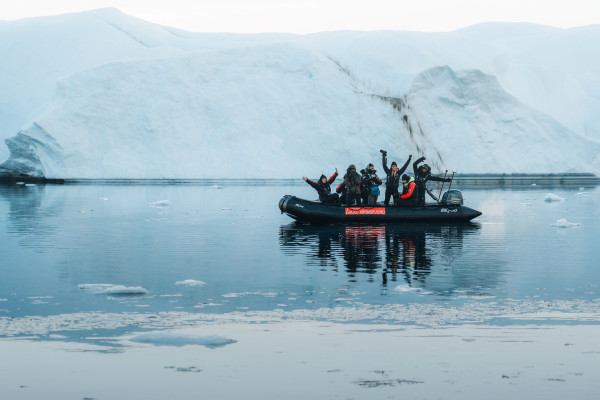
Unlike many well-known landing sites along the Antarctic Peninsula, Crystal Sound is most often experienced as a cruising passage. Its value lies in slow navigation through ice-filled waters, where wildlife encounters, ice formations, and glacial fronts are observed from ship or Zodiac rather than from shore.

The landscape and ice of Crystal Sound
Crystal Sound is characterised by broad, open waters framed by the mountainous coastline of Graham Land and the low-lying islands to the west. Glaciers descend directly to the sea, feeding the Sound with icebergs and brash ice that drift freely across its wide expanse.
Unlike narrow channels further north on the Antarctic Peninsula, Crystal Sound allows ice to move and reorganise continuously under the influence of wind and currents. Ice conditions can change rapidly, with clear leads opening one day and dense concentrations of floating ice forming the next. These shifting patterns define the experience of the Sound, shaping both navigation and the opportunities for observation.
The visual scale of the landscape — wide horizons, layered ice, and distant mountain ridges — gives Crystal Sound a more expansive feel than many of the Peninsula’s better-known passages, emphasising movement through space rather than confinement between steep cliffs.

Antarctic Spring Micro Fly Cruise - Sail One Way
54°16’S, 36°30’W
Sail across the Drake Passage and explore Antarctica in spring on a 44-guest Micro Cruise.
- guests
- 9 days

Antarctic Spring Micro Fly Cruise
54°16’S, 36°30’W
Skip the Drake Passage to awakening Antarctica in spring on a 44-guest Fly & Cruise. Witness penguins courting, whales returning, glittering pack ice, and thawing fjords—uncrowded and flexible.
- guests
- 10 days

Antarctic Christmas Micro Fly Cruise
54°16’S, 36°30’W
Experience a Christmas like no other in Antarctica on a 44-guest Fly & Cruise. Penguin chicks, whales, and glittering icebergs await in an uncrowded, flexible adventure.
- guests
- 10 days

Antarctic New Year Micro Fly Cruise
54°16’S, 36°30’W
Welcome the New Year in Antarctica on a 44-guest Fly & Cruise expedition. Witness penguin chicks taking their first steps, whales returning, and towering icebergs in an uncrowded, flexible polar adventure.
- guests
- 10 days

Antarctic Circle Micro Fly Cruise
54°16’S, 36°30’W
Sail beyond the legendary Antarctic Circle with just 36 guests. Explore pristine ice, wildlife-rich bays, and iconic sites without crowds, and free from rigid schedules.
- guests
- 10 days

Antarctic Summer Micro Fly Cruise — Sail One Way
54°16’S, 36°30’W
Fly one way and sail the other across the legendary Drake Passage on a 44-guest Antarctic expedition. See summer’s penguin chicks, whales and sculpted ice—uncrowded and free from rigid schedules.
- guests
- 9 days

Antarctic Autumn Fly Micro Cruise — Sail One Way
54°16’S, 36°30’W
Sail the Drake Passage once on a 44-guest Fly & Cruise expedition to Antarctica in autumn. Golden light bathes bustling penguin colonies, playful seals, and whales at their seasonal peak.
- guests
- 9 days

Falklands, South Georgia and Antarctica Micro Cruise
Combine Falklands, South Georgia and Antarctica on a 78-guest cruise expedition in Spring. Follow in Shackleton’s footsteps, witness penguin chicks and whales, and enjoy uncrowded, pristine landscapes.
- 78 guests
- 21 days

Wildlife viewing in Crystal Sound
Wildlife in Crystal Sound is closely linked to the presence of drifting ice and productive feeding waters. Humpback whales are commonly encountered during the austral summer, often moving through the Sound while feeding along the ice edge. Orcas are also observed, using the broken ice and open water to hunt seals.
Seals are a regular feature of the Sound. Leopard seals frequently haul out on ice floes or patrol the margins of the ice, while Weddell and crabeater seals occur where ice concentration provides both shelter and access to prey.
Crystal Sound is not known for large penguin colonies or fixed wildlife landing sites. Instead, encounters typically occur from ship or Zodiac while cruising, offering a dynamic perspective on Antarctic wildlife shaped by ice, weather, and seasonal conditions.

Visiting Crystal Sound
Crystal Sound can be visited during the Antarctic summer season, typically between November and March, when ice and weather conditions occasionally allow access to its southern waters. The experience is usually one of slow cruising by ship or Zodiac through open, ice-filled channels rather than visits to fixed landing sites.
Access is never guaranteed and depends entirely on prevailing conditions. When passage is possible, Crystal Sound offers a quieter, more observational encounter with the Antarctic landscape, shaped by scale, ice, and changing light rather than by individual landmarks.

Crystal Sound represents Antarctic expedition cruising at its most rewarding – remote, wildlife-rich, and genuinely unpredictable. Whether we cruise the Sound or not depends entirely on nature. That's precisely how it should be.



Phone
USA
USA+CAN Toll Free
AUS Toll Free
