
#42
A quieter way to travel: the case for an Expedition Micro Cruise in East Greenland

A number of our guests have written to us this year asking a version of the same question: is this the right year to be planning an Arctic trip, and if so, why East Greenland?
This is our answer. Five structural facts about what an East Greenland micro expedition actually is, why we think it sits apart from most international travel right now, and how we'd think about it if a friend asked. Randy Hanna and Dean Tatooles, the Secret Atlas photographers leading and contributing to our 2026 East Greenland season, have helped us shape it.
Before we begin, this is what an East Greenland Expedition Micro Cruise feels like.
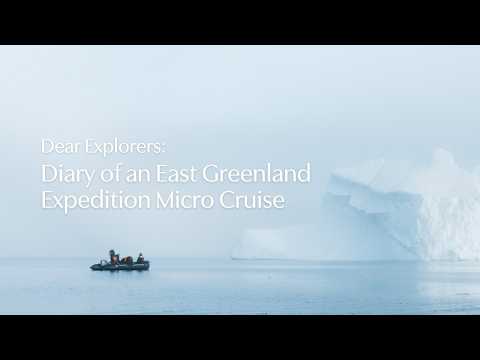
Filmed in 2025 over multiple voyages through the fjords of East Greenland, the settlement of Ittoqqortoormiit, and the quiet hours on deck under the aurora, this film follows what a twelve-guest expedition makes possible in one of the most remote corners of the Arctic.
The film is the place itself. The five sections that follow are the case.
1. The group is 12 guests. That changes everything.
A Secret Atlas Expedition Micro Cruise in East Greenland carries 12 guests, two polar guides, and a crew of eight.
That number isn't a marketing figure. It's the size at which your time is spent creating moments — not loading, sequencing, briefing, recalling, or waiting for the next group. It's the size at which the ship can hold position in a fjord without coordinating with anyone else. It's the size at which a visit to Ittoqqortoormiit, the only town in the northeast of Greenland, doesn't overwhelm the community receiving it.
For those thinking about safety in a broader sense, 12 guests means: you spend the entire voyage with eleven other people and the guide team. There is no anonymity. Our crew sails the same ships, season after season. The captain learns your name within the first few hours, and for our guides, that happens as you step foot on MV Vikingfjord or MV Freya. If anything happens — weather, ice, a medical question — the response is immediate and personal.
The ships themselves are built for this work. Ice-strengthened, certified under the Polar Code, low-emission, and refitted to micro-expedition standard. Ensuite cabins. A panoramic lounge. An on-deck sauna and hot tub. Capable in the conditions; comfortable when the day is done. The point isn't luxury — it's that smaller has never meant less safe or less considered. It means the opposite.

Randy Hanna, who has led photography expeditions in the polar regions for more than thirty years, put it this way when he joined the Secret Atlas team:
I seek out adventure travel providers that have a strong ethos in sustainability and conservation. After several years of searching among providers, I'm excited to partner with Secret Atlas."
— Randy Hanna
The same structural facts that make a Expedition Micro Cruise responsible in a sustainability sense make it safer in a personal sense. Smaller groups have smaller exposure to almost everything.

2. One flight to Iceland. From there, you're with us.
From most US east coast cities, the international journey is a single overnight flight to Reykjavík. Multiple US carriers and Icelandair operate this route daily. Total flight time from JFK or Boston is roughly five to six hours. Iceland is also connected with all major EU capitals.
Iceland is calm, well-run, and consistently ranked among the safest countries in the world for travellers.
At Keflavík, you're met by our team. From that moment, you're inside the Secret Atlas operation. The connecting flight — a Secret Atlas charter from Reykjavík to Constable Pynt, the gravel airstrip on the east coast that serves Scoresbysund — is part of the expedition rather than separate from it. Approximately two and a half hours on a small aircraft. By the time you land, the voyage has begun.
The handover matters because of what sits behind it. Secret Atlas is a small company, and our guest services team is reachable from the moment you start preparing for the trip. Questions about kit. A change in flight times. A passport you misplaced the week before departure. There is a real person at the other end of the phone or the chat — usually the same person each time — and they are accompanying you from home, through Reykjavík, and onto the ice.
That's the entire transit. No connections through major hubs. No transit through cities where you might not want to linger. The complexity is logistical, not geopolitical — and the logistics are ours, not yours.

3. Ittoqqortoormiit is one of the most isolated inhabited places in the Arctic — and the community welcomes visitors travelling at the right scale.
The town of Ittoqqortoormiit, located at the entrance to iceberg-strewn Scoresbysund, is the only permanent settlement on the entire east coast of Greenland. Population around 345. Supplies such as basic food and goods arrive twice a year by ship. It is geographically one of the most isolated permanently inhabited places in the Arctic.
The community hunts, fishes, and selectively receives visitors. The scale of tourism here is measured in dozens per season, not thousands. A micro expedition with 12 guests doesn't overwhelm Ittoqqortoormiit; it’s a visit at a scale the community can absorb and engage with.
This is the difference between a destination receiving you and a destination tolerating you. East Greenland's isolation is what makes a genuine cultural exchange possible.
The logistics make any other kind impossible.

Quote from Ruth Alvirez's Story:
"In East Greenland, Ruth walked with Niels, a local guide from Ittoqqortoormiit. He knew every face, every doorway.....
Raised in the village, he was educated abroad and returned back from university with the same quiet certainty. He was able to teach the guests of Freya about his culture, the unusual way he grew up beginning his manly chores of hunting at the age of 9, and how important it is to grow up and become brave at a young age."
4. The east coast is structurally separate from the west coast — and the west coast is where the tourism volume is.
This is the fact most travellers don't know, and it changes the calculation.
Greenland's tourism is concentrated almost entirely on the west coast: Nuuk, Ilulissat, the cruise ports facing Canada. The east coast — facing Iceland and the open North Atlantic — sees a small fraction of those numbers. Between the two coasts sits the Greenland ice sheet, roughly the size of Mexico and impassable. There is no road. There is no domestic flight connecting east to west. They are functionally separate destinations.
What this means in 2026: when you travel to East Greenland, you are travelling to a coast that has been structurally insulated from mass tourism — not by policy, but by geography. The pressures that have shaped the visitor experience on the west coast simply haven't reached the east. The fjords are quieter. The communities are smaller. The relationship with visitors is different.
Questions about our East Greenland departures?
Talk it through with a expedition specialist who's sailed it.
Wild nature, icebergs, glaciers, and from late August, the aurora.
Scoresbysund is the largest fjord system in the world. The fjords are sheltered, the seas are quiet within them — and the coast itself is, by any measure, one of the most extraordinary landscapes in the Arctic.
The main arm runs roughly 110 kilometres inland, branching into a 350 kilometer labyrinth of fjords lined with sandstone cliffs and calving glaciers. Icebergs the size of small towns drift through the inner channels. Muskoxen move down from the plateau in late summer. Polar bears roam these lands. Beluga and narwhal use the outer fjord seasonally. From late August onward, the auroras return as the nights lengthen.

Dean Tatooles, a working polar photographer who has photographed both poles across two decades, sees a similarity between Antarctic magnificence and that of Greenland:
"I'd have to say the nine seasons I spent travelling through the polar regions. It's just extraterrestrial. No place like it and you never know what beauty will present itself on any given day."
— Dean Tatooles

Randy's note from his own profile sits alongside Dean's. Asked about his most transformative travel experience, Randy's answer is this:
"Nothing can surpass seeing my first massive iceberg in Greenland — higher than a ten-storey building and seeming to extend for miles. Or first watching polar bears scramble on a sheet of ice as they carefully scanned the water for their next meal."
— Randy Hanna

Working polar photographers who have spent decades on both poles describe Greenland with a register that doesn't show up in most travel writing. The reason is that the landscape itself doesn't perform — it just is. Scale, light, ice, and the slow rhythm of a coast that has barely been visited.
What we'd say if a friend asked
If a friend asked us whether East Greenland made sense for 2026 — the question we've been getting all year — this is what we'd say:
The group is 12. The route is calm. The community welcomes this scale. The coast is geographically separate from the rest of the country's tourism. The landscape is extraordinary. Each fact stands on its own. Together, they make a case that doesn't depend on what anyone else in the world is doing this year.
The 2026 East Greenland season runs from late July to mid-September.
The following Secret Atlas voyages cover the window:

Northeast Greenland National Park Micro Cruise
76°50'N, 23°10'W
The ultimate Greenland experience – a unique two-week adventure into Northeast Greenland National Park, the world’s largest national park, and Scoresbysund, the longest fjord system on Earth.
- 12 guests
- 11 — 13 days

Scoresbysund Northern Lights Photo Tour with Randy Hanna
70°50’N, 25°00’W
Photograph the northern lights illuminating the skies above Scoresbysund with nature photography legend Randy Hanna.
- 12 guests
- 9 days
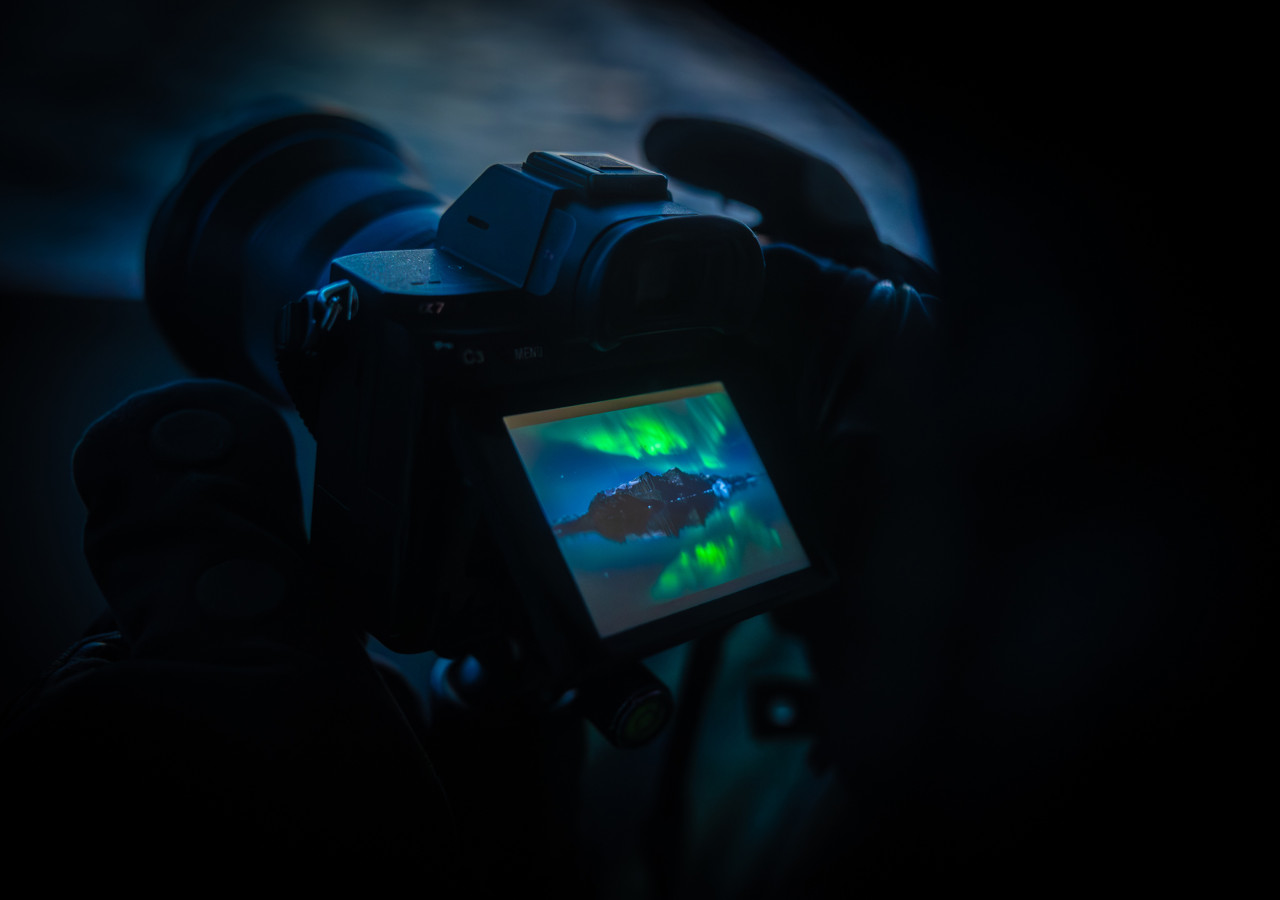
Scoresbysund Northern Lights Photo Tour with Virgil Reglioni
70°50’N, 25°00’W
With 0% light pollution and insane iceberg sculptures, paired with the world’s finest aurora borealis photographer, you’re in for a treat.
- 12 guests
- 9 days
Still weighing it up?
The team is reachable directly. Book a free twenty-minute consultation with an expedition specialist who's been on the ice in East Greenland.
Other relevant articles

#18 Polar Athena | A Legendary Vessel for Pola...
Polar Athena | A Legendary Vessel for Polar Exploration and Scientific Discovery

#39 Ruth Alvirez's Story: Where the Ice Teache...
Ruth Alvirez's Story: Where the Ice Teaches You to See

#19 Introducing Polar Athena: Why Expedition ...
Introducing Polar Athena: Why Expedition Micro Cruises and Small-Ship Tourism Matter


Phone
USA
USA+CAN Toll Free
AUS Toll Free
